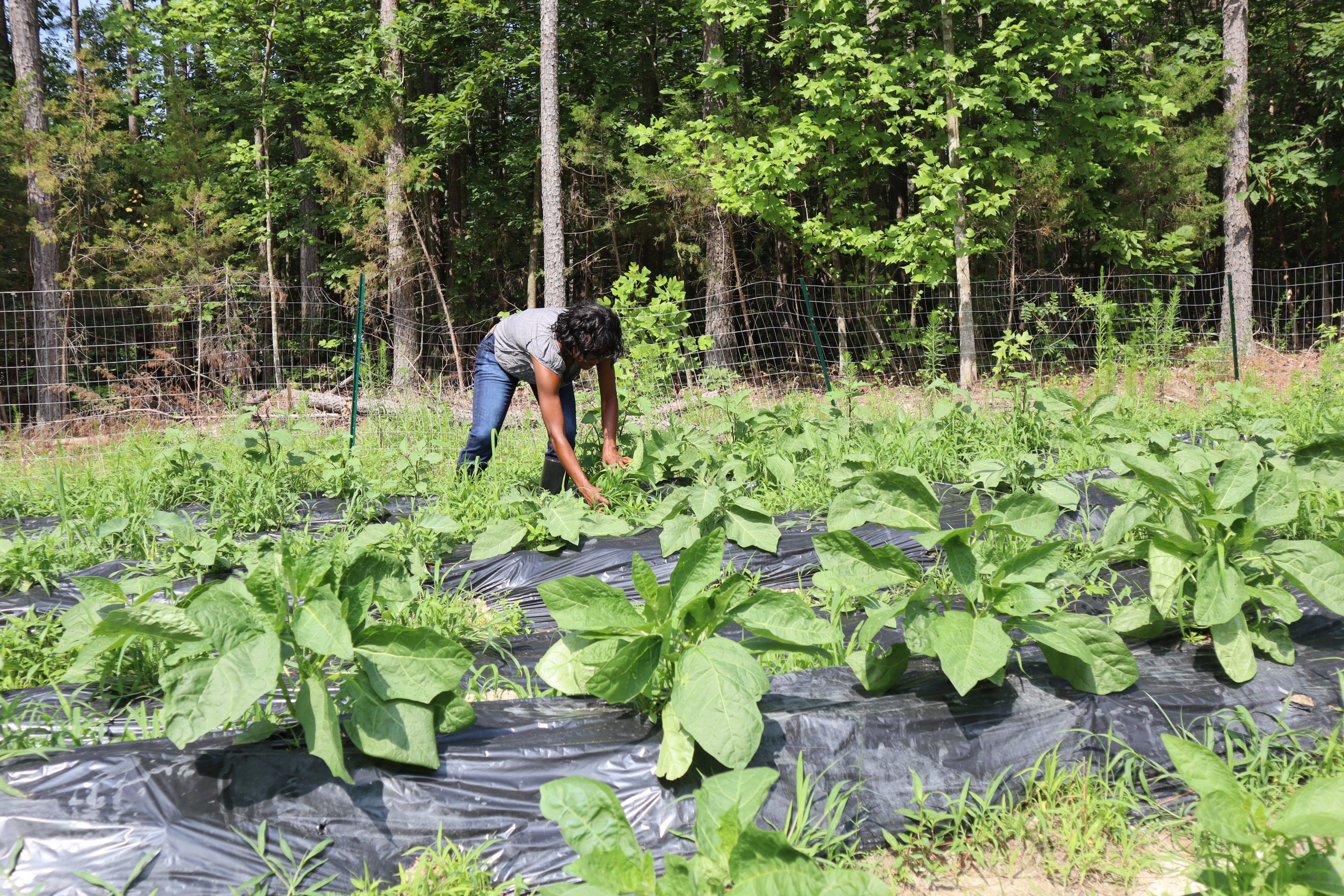

Esther Manor Farm
“To the next generation of women, I want you to know: your hands carry power. Whether you’re growing herbs, running field trips, teaching nutrition, or feeding families — you are shaping the future. Don’t be afraid to lead with purpose, heart, and heritage.”
Q: Tell us about your agricultural operation, your background and how you got started in agriculture.
“I am an educationist and teacher, deeply committed to wellness, food security, and community empowerment. I founded Esther Manor Farm as a space to grow African produce, medicinal herbs, and specialty crops not commonly found in local stores. Our focus is on organic, traditional African growing methods, rooted in ancestral knowledge and cultural preservation.
My passion for agriculture and plant-based healing began with my grandmother, a revered plant and medicinal specialist who nurtured and healed her community using traditional herbal remedies and indigenous crops. From her, I learned not only how to grow and care for the land, but also how food and herbs can be used to strengthen the body, spirit, and community.
At Esther Manor Farm, we grow nutritive and medicinal crops with high cultural and wellness value—foods that promote healing, resilience, and nourishment. As a teacher, I’ve integrated my love for education into the farm’s mission. We host field trips, workshops, and community gatherings to teach both children and adults about the nutritional, medicinal, and cultural importance of the crops we grow.
Our goal is to make the farm a living classroom and healing space, where traditional African knowledge meets community-based wellness and sustainability. We believe that food is medicine, and by sharing what we grow and know, we can build community resilience, food sovereignty, and cultural pride.
Q: What does working in agriculture, and specifically being a woman in agriculture, mean to you?
For me, working in agriculture is not just a profession — it is a calling, a form of service, and a way to honor the legacy of the women who came before me, especially my grandmother, who was a plant and medicinal specialist in our community. As a woman in agriculture, I feel I have stepped fully into her role — not only growing food but also feeding, building, and nurturing my community through knowledge, care, and connection.
It is truly an honor to do this work. The crops I grow at Esther Manor Farm — traditional African vegetables, medicinal herbs, and specialty crops — are rarely found in stores. Yet, they are deeply meaningful to people of African descent. When I deliver these crops to their homes, it’s as if I’ve delivered gold. Many have told me that simply seeing these plants again brings them back to a place of belonging, safety, and abundance — memories of their mothers’ kitchens or their grandparents’ gardens.
When people visit the farm, they often tell me how peaceful and joyful they feel. Some send me photos of the meals they’ve prepared with the produce, with heartfelt messages of gratitude. These moments remind me why this work matters so deeply.
Being a woman in agriculture also means bridging cultures and generations. I’m reaching new audiences here in the U.S. — sharing the nutritional and medicinal value of African crops with communities who may have never encountered them before. I host groups of African American women who are reconnecting with their heritage through food. I welcome students, interns, and field trip groups, offering hands-on learning that excites and inspires them. They leave with new knowledge, renewed purpose, and a deeper understanding of the land.
Agriculture, for me, is a tool for healing, education, and empowerment. It allows me to blend my background as an educator, wellness advocate, and community leader with the traditional knowledge passed down to me. As a woman in this space, I feel deeply proud to be cultivating more than crops — I’m cultivating resilience, culture, and community.
Q: What do you wish the next generation of women in agriculture would know about your work? What advice would you give them?
I want the next generation of women in agriculture to know that this work is powerful, sacred, and deeply transformative. At Esther Manor Farm, I grow traditional African crops and medicinal plants — foods that are rarely found in stores but carry rich histories, healing properties, and deep cultural meaning. I didn’t just inherit seeds from my grandmother; I inherited a legacy of nurturing, healing, and feeding a community.
This work goes far beyond planting and harvesting. It is about reclaiming knowledge, preserving heritage, and using the land to create spaces of belonging, wellness, and empowerment. When people of African descent visit my farm and see the crops they grew up with — foods that remind them of home — they often feel seen, grounded, and reconnected. That is the true harvest of this work.
To the next generation of women, I want you to know: your hands carry power. Whether you’re growing herbs, running field trips, teaching nutrition, or feeding families — you are shaping the future. Don’t be afraid to lead with purpose, heart, and heritage.
My advice is this:
- Honor the wisdom of those who came before you — especially the women who taught through stories, gardens, and care.
- Trust traditional knowledge and embrace organic, sustainable, and ancestral ways of growing.
- Create spaces for learning and healing — your farm can be a classroom, a sanctuary, and a community hub all at once.
- And above all, remember that your work matters. Even if it doesn’t look like the mainstream, even if your crops aren’t on every shelf, you are cultivating something much deeper — resilience, identity, and hope.
It is an absolute honor to do this work. And it will be your honor too.
Q: Have you had access to formal education or informal training programs to help you grow your operation?
Yes, I have benefited from both formal education and informal learning experiences, all of which have played a vital role in growing and sustaining Esther Manor Farm.
I hold a Ph.D. in Education and have taught in diverse educational settings. My academic background has equipped me with valuable skills such as research, critical thinking, inquiry-based learning, consensus building, and problem solving. These skills have proven essential in navigating the complexities of agriculture, community engagement, and business development.
In addition to my academic training, I have made intentional efforts to connect with my local government, small farms, and community organizations to build meaningful partnerships and explore collaborative opportunities. These local relationships have enhanced my understanding of community needs and strengthened the mission of Esther Manor Farm as a space for food security, cultural preservation, and healing.
I also regularly attend agricultural and wellness conferences to stay informed about current practices, policy shifts, and innovative approaches in organic farming, community health, and sustainable agriculture. These events provide rich opportunities for networking, learning, and sharing knowledge with other practitioners and thought leaders in the field.
I consider myself a lifelong learner and am never afraid to ask for help or seek out new knowledge. Whether it’s participating in a workshop, learning from fellow farmers, or listening to community elders, I’m constantly looking for ways to evolve and better serve the people connected to the land I cultivate.
Together, these educational experiences, partnerships, and training opportunities have given me the tools, support, and insight needed to build and grow Esther Manor Farm into a thriving, community-centered agricultural operation
Q: What would make it easier for women in agriculture to access the capital they need?
To improve access to capital for women in agriculture, two key areas need to be addressed:
- Create funding programs tailored to women’s realities.
Many women in agriculture operate small-scale, community-based farms or culturally specific growing operations that don’t fit traditional funding models. Programs need to be intentionally designed to consider challenges such as limited land ownership, lack of collateral, and caregiving responsibilities. More flexible, inclusive funding options would allow women to access capital without being penalized for not fitting into conventional agricultural molds.
- Improve access to information and simplify application processes.
Often, women simply aren’t aware of the grants, loans, or resources available to them. And when they are, the application process can be overwhelming and complex. Providing clearer guidance, outreach through trusted networks, and technical assistance would go a long way in helping more women confidently apply for and secure the capital they need.
Finally, there must be intentional investment in women-led, community-centered agricultural models—like those focused on traditional crops, wellness, education, and food security. These models may not always be high-revenue in a conventional sense, but their social and cultural value is immeasurable. Capital should not only support profit-driven agriculture, but also the kinds of farms that feed, heal, and empower communities.
In short, improving capital access for women in agriculture means investing not just in farms—but in the people, stories, and systems that make them thrive.
Q: What technologies or innovations have made the biggest difference on your farm? How do you stay informed about best practices, weather, markets, or new technologies?
At Esther Manor Farm, I primarily rely on traditional farming methods passed down from my grandmother—practices that are trusted, tested, and as old as time. These time-honored techniques have proven effective in nurturing the soil, cultivating healthy crops, and maintaining the natural balance of the land.
While I honor these traditional methods, I stay informed about best practices and new developments by engaging with local agricultural networks, attending conferences, and participating in community gatherings. These connections help me learn about emerging ideas while maintaining a strong foundation in organic and culturally-rooted farming.
Additionally, there is a large diasporic population in the U.S. that depends on the unique crops I grow, and I have access to these groups through community outreach and events. This connection allows me to better understand their needs and market demands while sharing the nutritional and cultural significance of these crops.
By blending ancestral wisdom with community engagement and contemporary knowledge, I am able to sustain and grow Esther Manor Farm in a way that respects both heritage and innovation.
Q: Describe a specific challenge you faced and how you overcame it.
One significant challenge I faced was growing produce year-round. Since my crops are tropical, they thrive only during the warm months, and I don’t have industrial-scale storage to preserve large quantities outside the growing season.
I overcame this challenge through support from two key resources. A grant from the Natural Resources Conservation Service (NRCS) provided me with a hoophouse. I will now be able to extend my growing season beyond the typical warm months. Additionally, with funding from the Virginia Foundation for Agriculture Innovation Fund (VFAIF), I am now able to invest in cold storage facilities, which will help me preserve crops and supply fresh produce throughout the year.
These investments will significantly improved my farm’s resilience and capacity to meet the needs of my community consistently.
Q: Has your state department of agriculture helped you advance your operation? How?
Yes, my state department of agriculture has been instrumental in advancing my operation.
In 2024, my farm received a grant through the Esther Global Foundation, which allowed us to supply specialty crops to food-insecure individuals and families across Virginia. That support helped us expand our crop offerings and invest in farm infrastructure, significantly increasing both our reach and our community impact.
But 2025 brought some of the hardest challenges I’ve faced. There were funding cuts, a severe worker shortage, and I lost most of my farmhands just as I expanded planting. I had planted an entire acre of okra—only to have it completely devoured by deer. In an attempt to protect the crops, I sprayed the young okra plants with ghost pepper, hoping it would deter the animals. Instead, my team and I had such a severe reaction that we fell ill for three days… and the deer kept coming. The pepper must have added more flavor—they seemed to enjoy it even more.
I was physically exhausted, emotionally drained, and deeply discouraged. I remember calling out to my ancestors and to God to ask why I am having such a difficult year. I specifically spoke to my late grandmother, whom I always invoke when planting. I said, “”Big Mami… why are you letting this happen? I asked you to keep the deer away. Why are you allowing this?””
I seriously considered shutting everything down.
But I persisted.
Later that year, I received notification that I had been awarded the Virginia Food Access Investment Fund (VFAIF) grant. The announcement came from the Governor office, and soon after, I was interviewed by 12 On Your Side and featured on prime-time news.
The response was overwhelming. My phone rang nonstop. People from across Virginia reached out—some visited the farm, others wanted to collaborate. The visibility was so intense that I eventually paused sharing the news articles. But when I saw the story air on TV—my name, my crops, and my farm on the screen—I dropped to my knees and cried.
That moment gave me something I didn’t even know I needed: validation, recognition, and legitimacy. It affirmed that my work matters—that Esther Manor Farm matters. And once again, I spoke to my grandmother: “Big Mami… you have watching all along. I know you’re proud.”
My state department of agriculture not only helped expand operation but has also given me unexpected opportunities. Just recently, I called a local vendor for services and he said, “Oh, I saw you on TV! When you came on TV, I said , I know that lady!”—and he proceeded to give me a discount for the services I requested.
That’s visibility and legitimacy that the department of Agriculture has given me. Thanks to this support, I now have the momentum and motivation to keep going—and to keep growing.