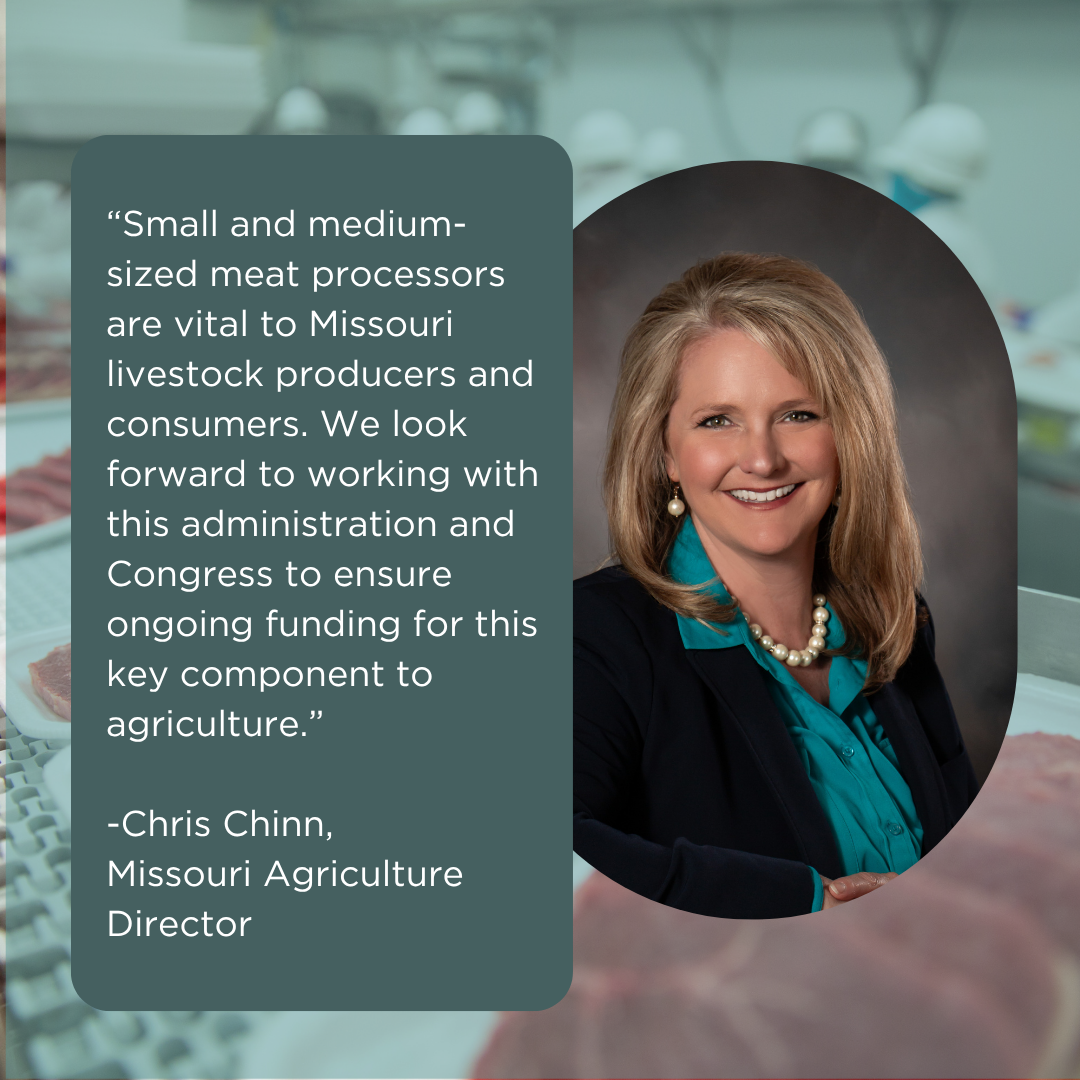
State cooperative agreement funding is critical to maintaining a safe and abundant domestic food supply.
Federal budget constraints and reductions in funding to state agencies have affected a number of state-administered programs. In some cases, these changes have resulted in staffing reductions and shifts in how programs are delivered. These developments may also affect long-standing cooperative arrangements between federal and state partners that support regulatory activities across the agri-food system.
NASDA encourages Congress to maintain strong support for cooperative agreements that enable effective state–federal collaboration. Sustained investment in these partnerships helps ensure that programs, which are critical to food safety, continue to operate efficiently and effectively.
What Are Cooperative Agreements?
Cooperative agreements are a collaborative funding instrument used by federal agencies to provide money to other entities for specific programs that benefit the public. Unlike grants, they involve shared responsibilities and active collaboration between federal agencies and recipient organizations (e.g., state governments, nonprofit organizations and universities). The use of fully-funded cooperative agreements ensures successful and impactful outcomes, particularly in the vital areas of food safety, biosecurity and public health.

Featured Resources
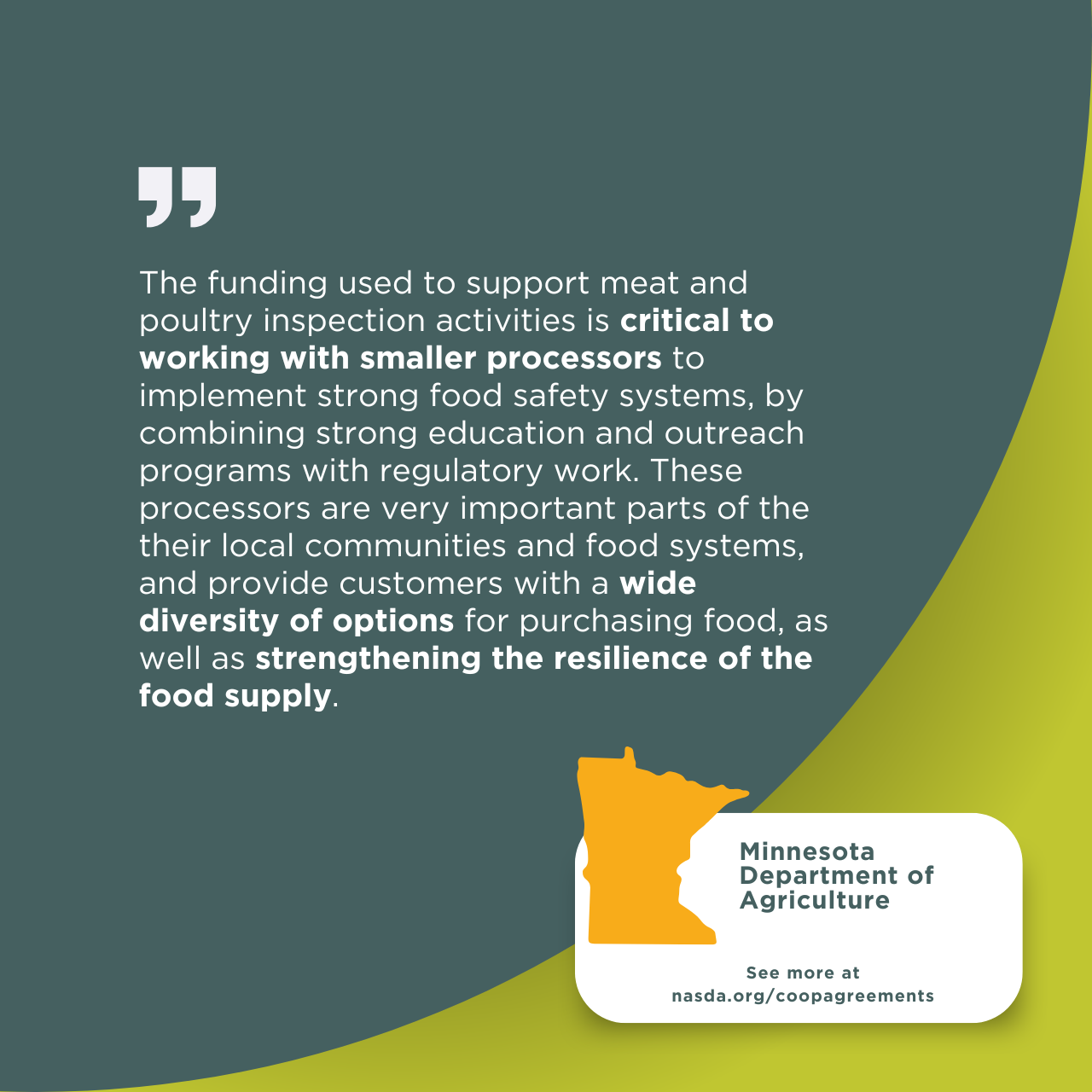
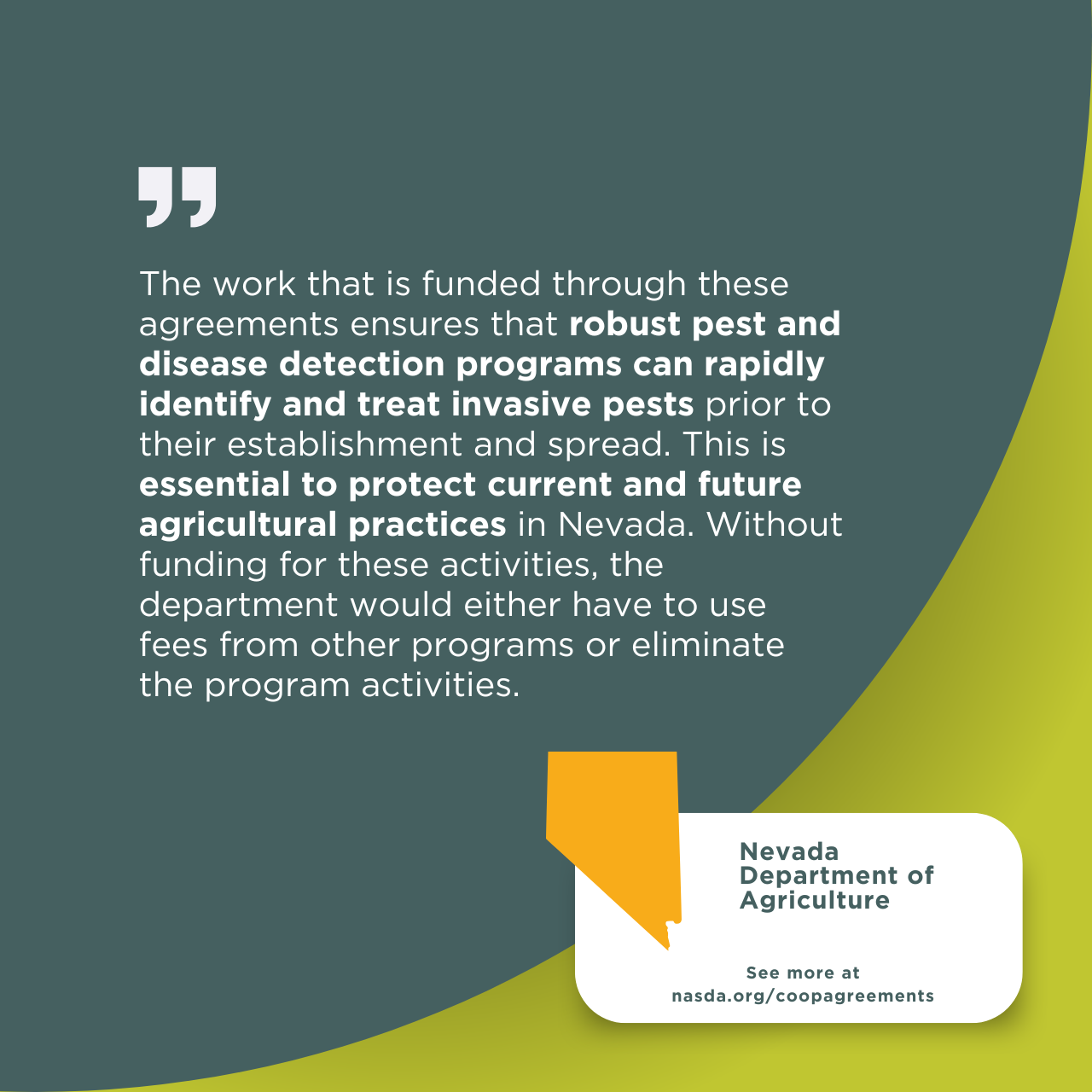
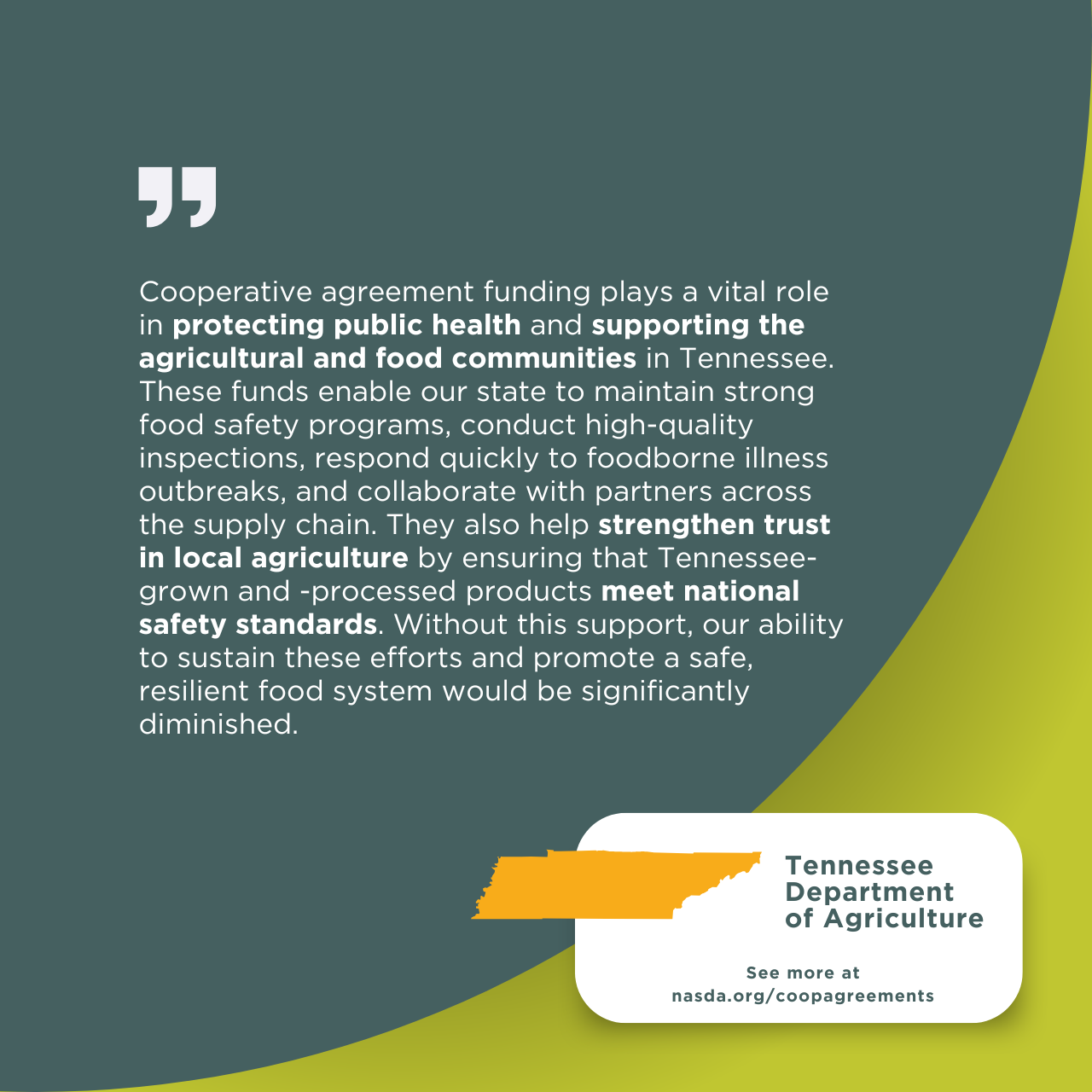
State Impact: How cooperative agreements help state departments of agriculture ensure a safe and resilient food supply
State departments of agriculture voice support for USDA funding increase for state food safety inspections
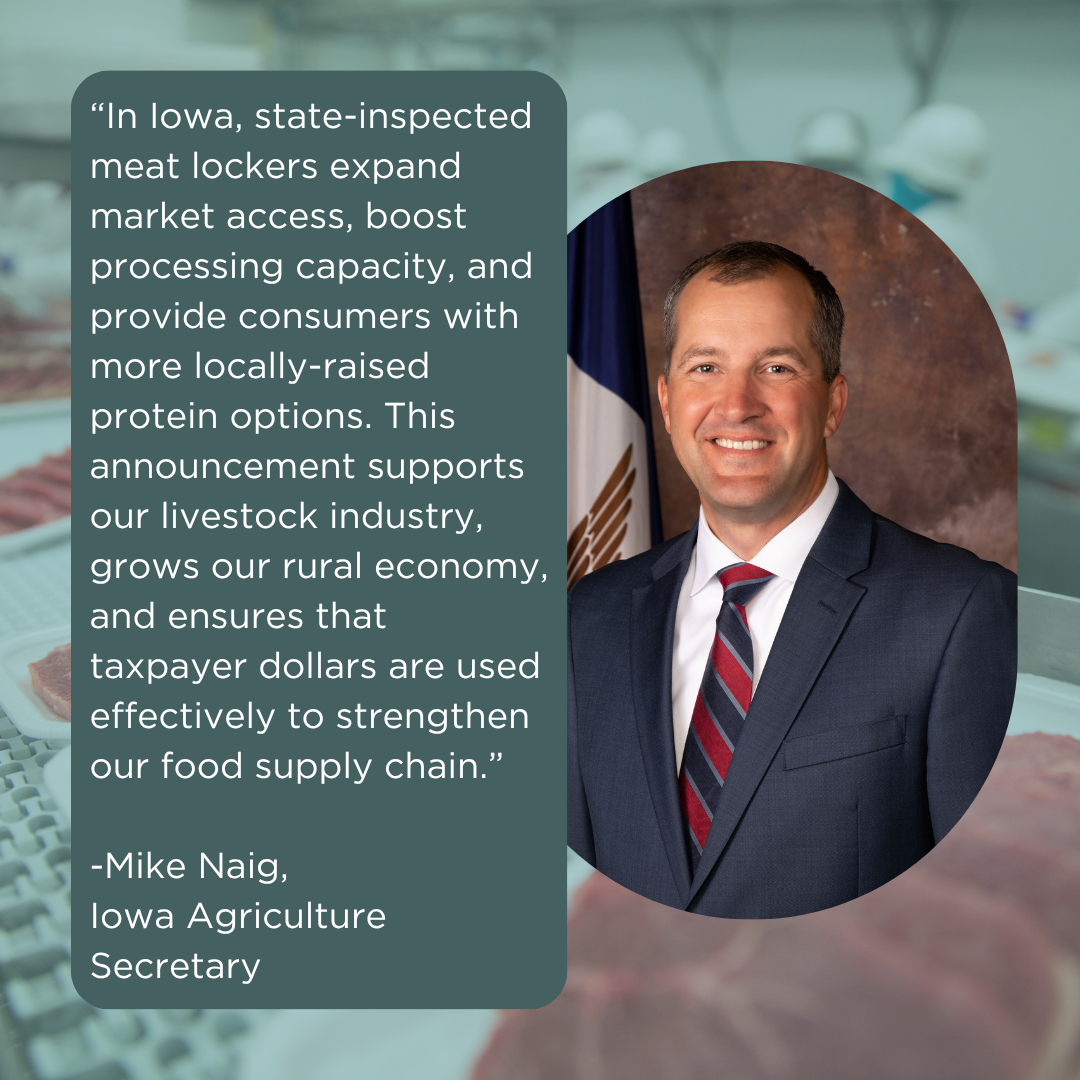
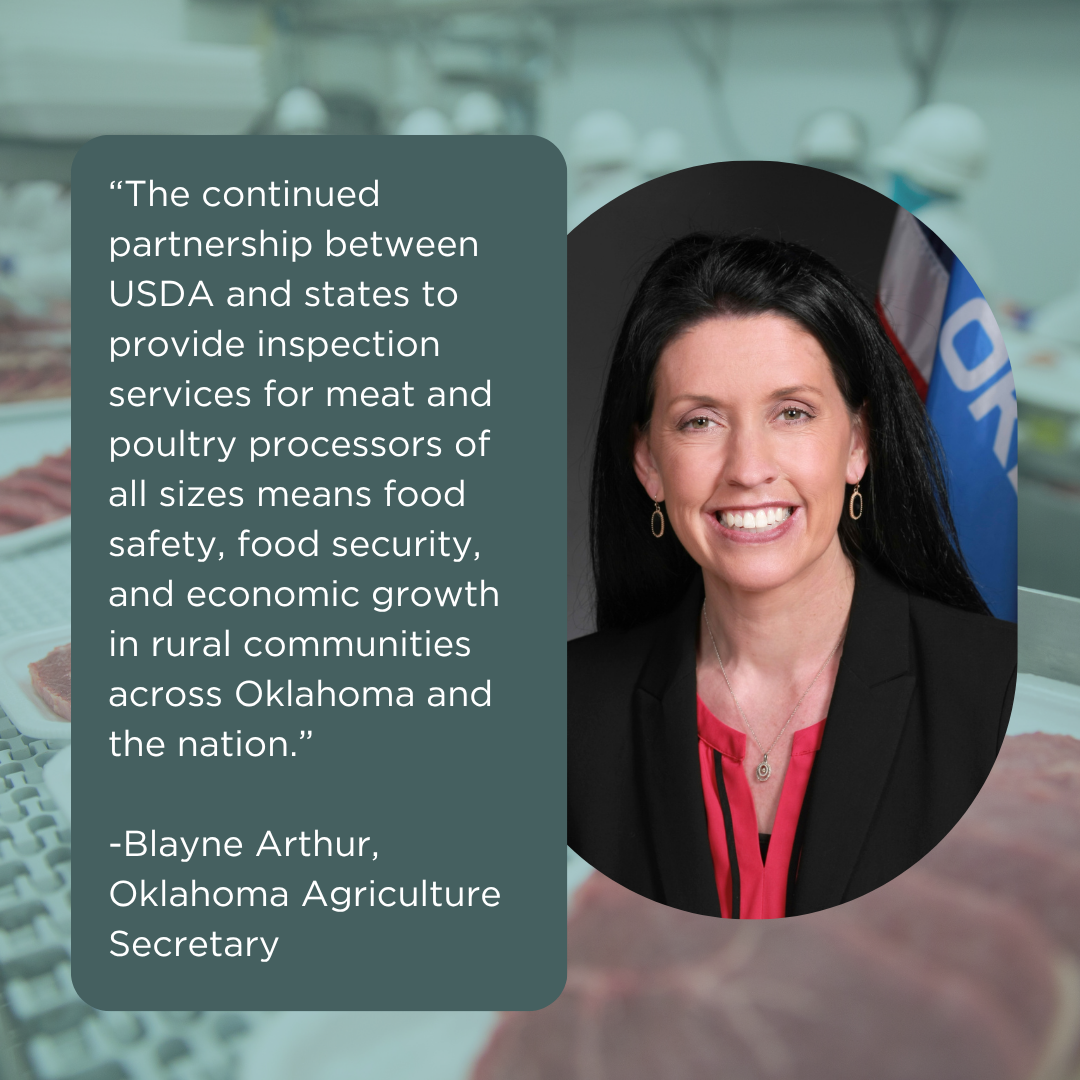
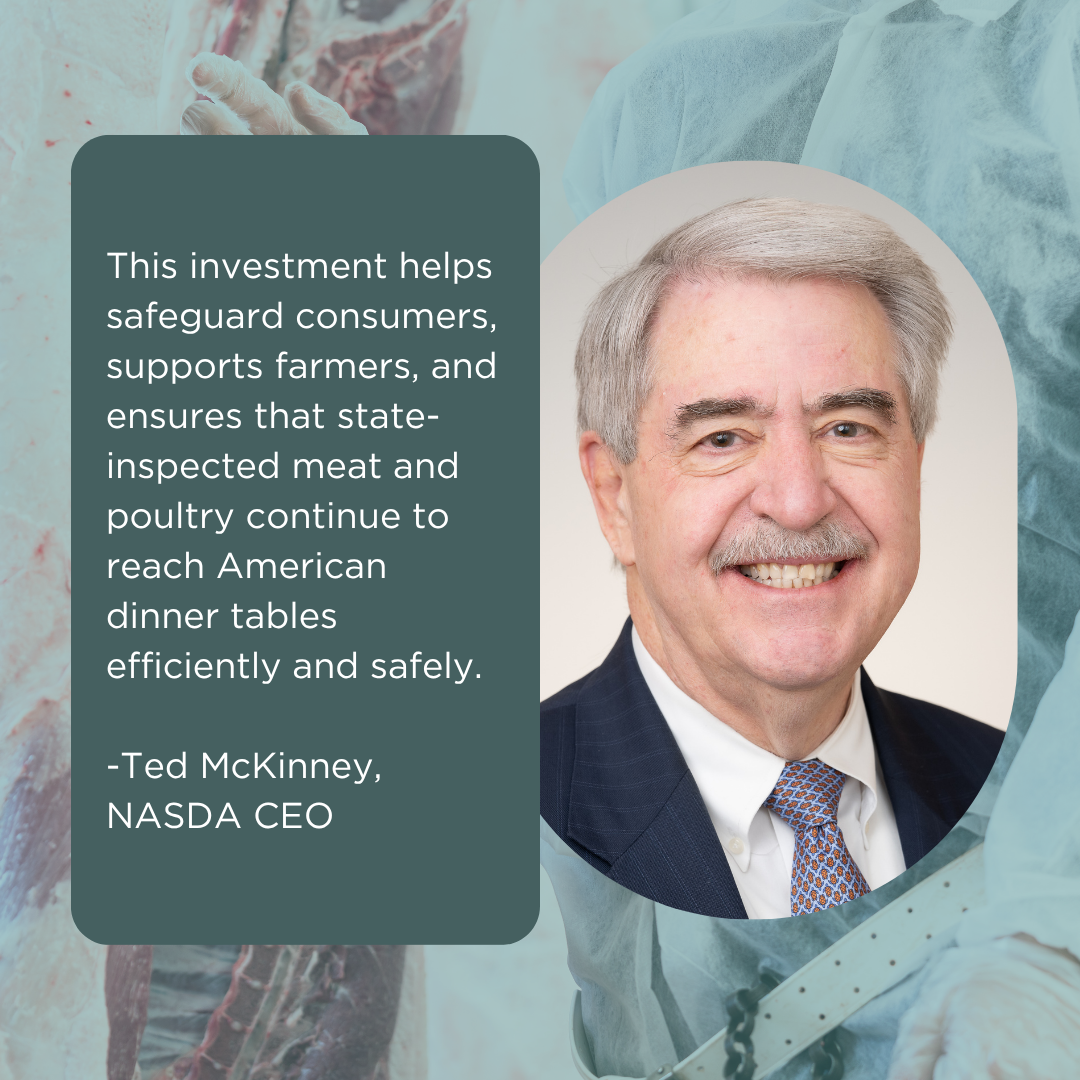
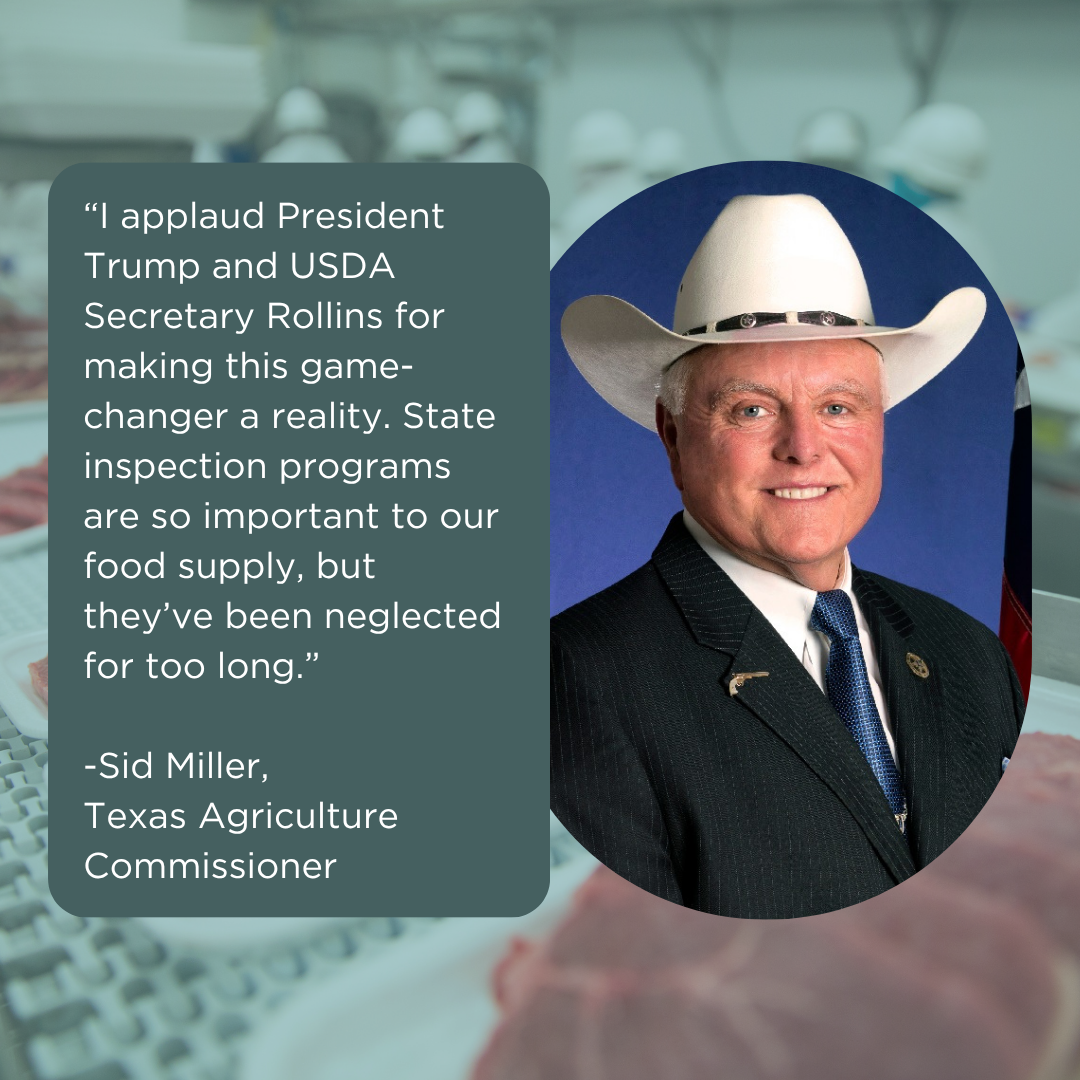
USDA’s Food Safety and Inspection Service announced a one-time funding increase for the cooperative agreement supporting state meat and poultry inspection programs. NASDA has advocated for funding state inspection programs to ensure states can continue delivering safe, high-quality meat and poultry to consumers. NASDA members applaud this one-time increase and NASDA continues to request consistent funding.