










Save the Date: Upcoming NASDA RAPP Trade Missions
***Dates subject to change
In May 2024, NASDA received USDA Foreign Agricultural Service Regional Agricultural Promotion Program funding to focus on Africa, Latin America, Southeast Asia, the United Kingdom and the EU. NASDA will use these funds to lead delegations, consisting of NASDA members and industry partners, to continue efforts initiated through the Emerging Markets Program with expanded markets. NASDA will lead the following trade missions this year and will continue to update this list as dates are confirmed. For more information, contact NASDA International Trade Programs Senior Director Megan Weeks.
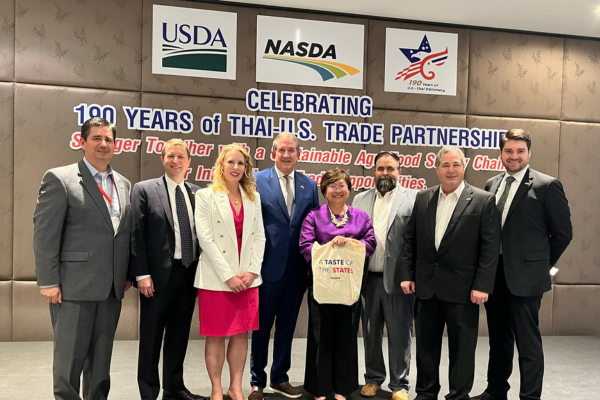
Outbound: Thailand
April 24–May 1, 2026
Inbound: Finland Delegation to Maine
Portland, Maine
June 1–5
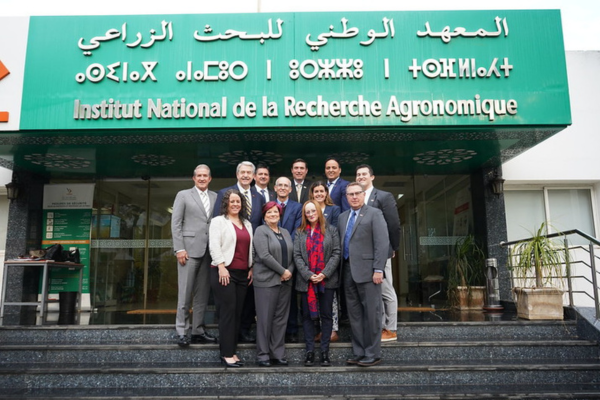
Inbound: Morocco, Senegal & Kenya Delegation to NEASDA Annual Meeting
Amherst, Massachusetts and Burlington, Vermont
June 7–12
Inbound: Thailand & Vietnam Delegation to SASDA Annual Meeting
Cambridge, Maryland
June 13-19
Inbound: Colombia & Panama Delegation to WASDA Annual Meeting
Flagstaff, Arizona
July 18-24
Outbound: Africa Food Systems Forum
September 2026
Outbound: Spain and Morocco
Oct. 2-9, 2026
Outbound: Romania
Oct. 17-24, 2026
Outbound: Chile
Nov. 1-6, 2026
2026 NASDA Trade Missions
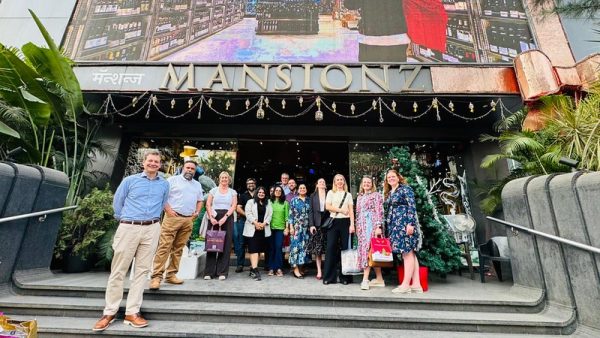 From Jan. 4–10, 2026, NASDA led an outbound trade mission to Mumbai to strengthen agricultural cooperation and long-term market access between U.S. producers and India’s expanding food and ingredient markets. The delegation included NASDA leadership and state agriculture officials from Arizona, Connecticut, Illinois, Montana and New Mexico, alongside U.S. Department of Agriculture partners.
Supported by USDA’s Regional Agricultural Promotion Program, the mission advanced NASDA’s efforts to build sustained engagement in priority markets. India’s large and rapidly evolving food economy offers growing opportunities for U.S. agricultural exports, especially in pulses, tree nuts, value-added foods and alternative proteins.
Delegates met with USDA’s Foreign Agricultural Service in Mumbai, Indian government officials and an array of agribusiness stakeholders. A NASDA-hosted industry reception provided space for U.S. and Indian partners, regulators and private sector leaders to discuss market opportunities, regulatory frameworks and partnership models that support responsible, long-term market entry.
Engagements with Indian importers and processors highlighted demand drivers and regulatory considerations affecting U.S. exporters. Company visits and industry briefings underscored the importance of tariff structures, labeling requirements and certification standards, as well as the role of localized pricing, packaging and product formats in successful market strategies.
Sector-specific discussions provided deeper insight into priority categories. Meetings with the India Pulses and Grains Association reflected India’s structural reliance on pulse imports while illustrating price sensitivities and duty challenges. Conversations with plant-based food and foodservice stakeholders explored emerging opportunities aligned with India’s evolving consumer preferences.
Facility tours in the Mumbai region gave delegates a firsthand look at cold storage, processing and distribution infrastructure, reinforcing the need for coordinated logistics and value-added supply chains. These visits emphasized that market entry in India often begins with pilot-oriented approaches supported by import partners and regulatory readiness.
Policy engagements with Indian regulators and technical institutions highlighted shared priorities on food safety, compliance and transparency. A NASDA-led research roundtable facilitated direct dialogue among Indian industry leaders and U.S. officials, helping build understanding of regulatory expectations and collaboration pathways.
The mission identified future pathways for continued engagement, including inbound delegations, targeted market research and expanded regulatory dialogue. By bringing together state agriculture leaders, industry stakeholders and government partners, NASDA advanced USDA’s RAPP goals while reinforcing its role as a convener of practical, market-focused engagement.
Through sustained, coordinated efforts, NASDA remains committed to facilitating state-led agricultural partnerships that bolster market access, strengthen trade relationships and support the long-term success of U.S. agriculture in India.
2025 NASDA Trade Missions

From Oct. 25–30, 2025, NASDA hosted an inbound delegation from the United Kingdom for a fact-finding mission focused on sustainable aviation fuel, biofuels policy and low-carbon agricultural systems. The delegation included senior officials from the U.K. Department for Transport, the Department for Environment, Food and Rural Affairs, Airlines UK and the British Embassy, alongside NASDA leadership and state agriculture officials from Illinois, Iowa and Nebraska.
Supported by USDA’s Regional Agricultural Promotion Program, the mission advanced NASDA’s ongoing efforts to deepen U.S.–U.K. collaboration on bioenergy and agricultural sustainability. With the United Kingdom preparing to implement a national sustainable aviation fuel mandate, discussions focused on regulatory frameworks, lifecycle carbon-intensity accounting, industrial emissions policy and the role of agricultural feedstocks in future SAF supply chains.
Throughout the mission, delegates engaged with state regulators, researchers and industry leaders across the Midwest. In Illinois, meetings with agricultural and energy stakeholders explored feedstock-to-fuel pathways and logistics, while site visits highlighted ethanol production, intermodal infrastructure and coordination across the agricultural value chain. In Iowa, delegates toured farms, research facilities and renewable fuels operations to examine sustainability practices, biotechnology adoption and policy alignment supporting biofuel production.
In Nebraska, the delegation focused on ethanol production, carbon capture and storage strategies, permitting pathways and industrial cluster development. Meetings with state officials, ethanol producers and logistics partners underscored the integration of agriculture, energy infrastructure and regulatory oversight. Discussions emphasized how emissions reduction strategies, soil health practices and supply chain transparency support both environmental performance and market development.
Delegates consistently noted the value of firsthand exposure to U.S. production systems and regulatory approaches. Many highlighted the importance of understanding how ethanol production intersects with animal feed markets, rural economic development and carbon reduction goals. The mission also strengthened dialogue between U.S. producers and U.K. policymakers as the United Kingdom evaluates policy options related to SAF deployment and feedstock sourcing.
The mission identified clear opportunities for continued collaboration, including regulator-to-regulator exchanges, engagement in the U.K. Department for Transport’s forthcoming call for evidence and future inbound and outbound programs under RAPP. By facilitating direct engagement among policymakers, producers and researchers, NASDA continues to support science-based dialogue and practical cooperation that advances sustainable fuel development and strengthens transatlantic agricultural partnerships.
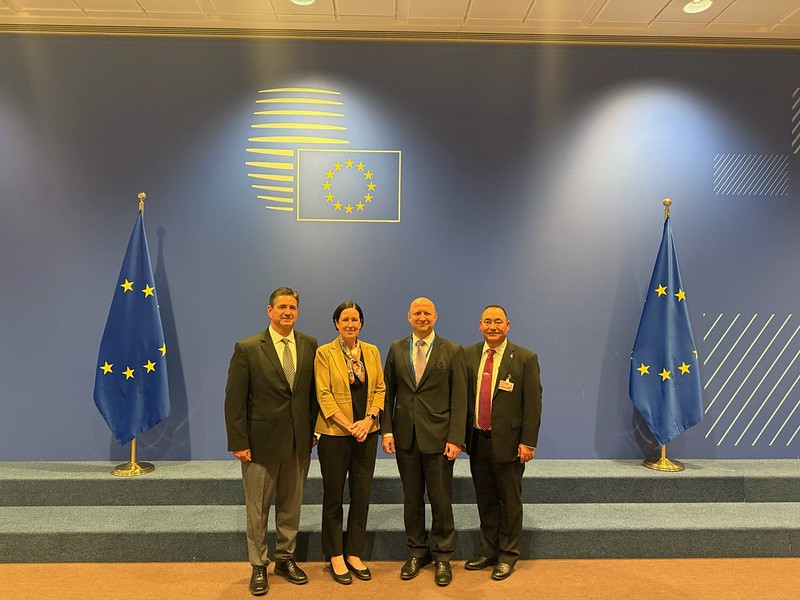
From Oct. 20–24, 2025, NASDA members and staff traveled to Brussels and Paris for an outbound trade mission focused on strengthening transatlantic engagement and advancing U.S. agricultural interests with key European Union institutions. The delegation included Commissioner Amanda Beal of the Maine Department of Agriculture, Conservation and Forestry; Director Jerry Costello of the Illinois Department of Agriculture; Director Doug Miyamoto of the Wyoming Department of Agriculture; and NASDA leadership and staff.
Supported by USDA’s Regional Agricultural Promotion Program, the mission was organized in close collaboration with USDA’s Foreign Agricultural Service offices in Brussels and Paris. The program aimed to provide NASDA members with firsthand insight into evolving EU agricultural and trade policy, while elevating the role of U.S. states as constructive, science-based partners in international dialogue.
In Brussels, the delegation met with senior officials from the European Commission, the European Council and leading agricultural stakeholder organizations. Discussions focused on regulatory and market access issues with significant implications for U.S. agriculture, including new genomic techniques, sustainability standards, deforestation policy, trade coherence and science-based regulation. Roundtables with industry and producer groups provided opportunities to exchange perspectives on competitiveness, innovation and the role of global trade in food security.
The delegation also engaged with representatives from EU directorates responsible for agriculture, health, environment and trade, gaining insight into the European Union’s shifting policy landscape and its move toward a more pragmatic framework centered on resilience and competitiveness. Meetings underscored the importance of predictable trade rules, regulatory transparency and continued transatlantic cooperation.
In Paris, discussions with France’s Ministry of Agriculture and Food and agricultural organizations highlighted shared priorities in biosecurity, animal health, plant breeding innovation and research collaboration. Engagements with industry representatives and importers provided additional perspective on European market dynamics and consumer expectations, as well as opportunities for U.S. agricultural products in a competitive environment.
Throughout the mission, delegates emphasized the value of direct engagement with European policymakers and industry leaders. The trip strengthened relationships, improved understanding of EU regulatory processes and identified opportunities for continued dialogue and collaboration, including potential reciprocal visits and follow-up engagement.
The Brussels–Paris mission reinforced NASDA’s role as a trusted advocate for U.S. agriculture in global policy discussions. By engaging directly with European institutions and stakeholders, NASDA continues to support science-based trade, informed policymaking and long-term market access opportunities for U.S. farmers and ranchers.

From Oct. 4–11, 2025, NASDA welcomed an inbound delegation from the Philippines for a trade mission focused on livestock health, regulatory systems and food supply chain resilience. The delegation included officials from Philippine government agencies, industry representatives and livestock sector stakeholders, alongside NASDA staff and U.S. partners.
Supported through USDA programs, the mission advanced NASDA’s ongoing efforts to strengthen science-based agricultural systems and support market access through technical cooperation. Discussions centered on animal health surveillance, biosecurity, risk-based inspection systems and emergency preparedness, all of which play a critical role in protecting animal agriculture and maintaining trade continuity.
Throughout the mission, delegates engaged with government officials, researchers and industry leaders through technical briefings and site visits. Meetings with state and university partners highlighted U.S. approaches to livestock disease prevention, diagnostic capacity and extension services that connect research with on-farm application. Delegates also examined state-level regulatory oversight and coordination with federal agencies to better understand how animal health systems are implemented in practice.
Discussions emphasized the importance of traceability, surveillance networks and data-driven decision-making in strengthening food supply security. Delegates explored how risk-based inspection frameworks and coordinated emergency response planning help mitigate disease risks while supporting efficient trade and market access.
The mission identified opportunities for future collaboration in livestock traceability, animal health capacity building, crop insurance models and genetic technologies. Delegates noted the value of firsthand exposure to U.S. regulatory systems and expressed interest in continued technical exchanges to inform policy development and industry best practices in the Philippines.
By facilitating direct engagement among policymakers, researchers and industry stakeholders, NASDA continues to support knowledge sharing that strengthens agricultural systems and promotes resilient, science-based trade relationships. The Philippines mission laid the groundwork for continued collaboration through follow-up exchanges and future trade missions.
 From Oct. 4–11, 2025, NASDA welcomed a high-level delegation from Kenya to Indiana for a weeklong inbound trade mission focused on biotechnology, animal feed, biofuels and sustainable agricultural systems.
Hosted in partnership with the Indiana State Department of Agriculture and supported by the U.S. Department of Agriculture’s Foreign Agricultural Service in Nairobi, the program brought together officials from Kenyan government ministries, the private sector, academia and civil society to explore opportunities for collaboration with U.S. agricultural producers and researchers.
The visit built on NASDA’s ongoing work under USDA’s Emerging Markets Program and Regional Agricultural Promotion Program to strengthen agricultural ties between the U.S. and Kenya. Delegates toured Lamb Farms, Archer Daniels Midland’s Frankfort facility and POET Biorefining, gaining firsthand insight into U.S. leadership in biotechnology, renewable energy and animal feed production.
At Purdue University’s Corn and Soybean Innovation Center, experts highlighted research in crop genetics, bioengineering and extension programs that connect innovation with on-farm application. Participants also visited Hulsbosch Dairy, Fischers Inc. and family-run farms across Indiana to see how mechanization, genetics and sustainability practices drive productivity and resilience.
Delegates emphasized that the mission deepened their understanding of how science-based regulation and technology adoption contribute to food security and market growth. Many expressed interest in collaborating on biotechnology, ethanol blending, precision farming and dairy innovation to strengthen Kenya’s agricultural value chains.
“Seeing how biotech and mechanization directly improve yields and reduce costs was eye-opening,” said one delegate. “It demonstrated that innovation and food security can go hand in hand.”
The mission underscored the importance of continued U.S.–Kenya engagement through technical exchanges, policy dialogue and trade promotion. NASDA and its partners plan to build on this progress through future RAPP trade missions to Kenya, expanded knowledge-sharing forums and joint initiatives with U.S. cooperators, including the Food and Agriculture Export Alliance and Rose Research.
By fostering collaboration among farmers, scientists and policymakers, NASDA continues to advance innovation-driven agricultural trade that benefits producers and consumers in both countries.
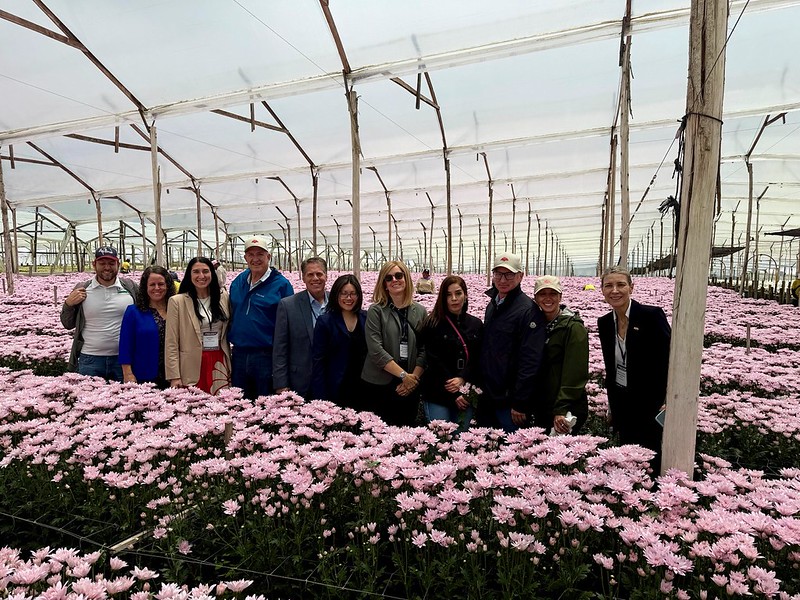
From Sept. 27–Oct. 4, 2025, NASDA members and staff traveled to Colombia for an outbound trade mission focused on agricultural market development, innovation and sustainability. The delegation included state agriculture leaders from Indiana, Maine, Montana and South Carolina, alongside NASDA staff and partners from USDA’s Foreign Agricultural Service in Bogotá.
Supported by USDA’s Regional Agricultural Promotion Program, the mission sought to strengthen agricultural cooperation between the United States and Colombia and to advance two-way trade opportunities with one of the United States’ key agricultural partners in Latin America. Colombia was selected for its growing demand for agricultural inputs, strong food and feed manufacturing sector and strategic role as a gateway to regional markets.
The mission began in Medellín, where delegates met with Colombian agribusinesses involved in food processing, animal feed, nutrition and ingredients. Site visits and meetings with fruit processors, feed manufacturers and food companies highlighted Colombia’s reliance on U.S. agricultural inputs, particularly corn, soybeans, wheat and other ingredients, as well as opportunities to improve supply chain efficiency, quality standards and feed safety.
Delegates also engaged with leaders in Colombia’s food manufacturing and floriculture sectors, examining sustainability practices, innovation and export-oriented production. A visit to a major flower producer underscored Colombia’s leadership in floriculture and provided opportunities for knowledge sharing on environmental stewardship, logistics and labor practices. The mission included a reception with Colombian industry and institutional leaders, reinforcing relationships and facilitating new business connections.
In Bogotá, the delegation met with representatives from Colombia’s leading agricultural associations, dairy processors and business organizations to discuss market access, trade policy and shared priorities in sustainable production and rural development. Visits to wholesale markets and participation in Proflora 2025 provided additional insight into Colombia’s domestic food distribution systems and its role as a global leader in cut flower exports.
Throughout the mission, delegates emphasized the value of direct engagement with Colombian companies and policymakers. Discussions highlighted opportunities for U.S. states to expand exports of grains, pulses, dairy ingredients and value-added products, as well as to leverage logistical advantages and port infrastructure to support trade growth.
The mission strengthened U.S.–Colombia agricultural relationships and identified clear pathways for continued collaboration through follow-up engagement, potential inbound missions and future trade promotion activities under RAPP. By convening state agriculture leaders and fostering dialogue with Colombian partners, NASDA continues to support resilient, inclusive and mutually beneficial agricultural trade that benefits producers and consumers in both countries.
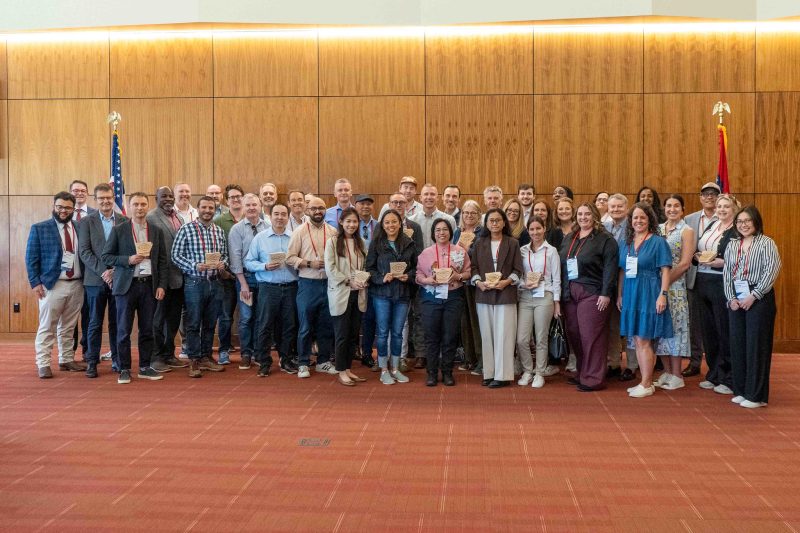
From September 16–18, 2025, NASDA hosted more than 30 agricultural attachés representing over 25 foreign embassies in Washington, D.C., for an Agricultural Attaché Tour in Rogers, Arkansas. Held in conjunction with the NASDA Annual Meeting, the program strengthened relationships between U.S. state departments of agriculture and the international diplomatic community while providing participants a firsthand look at American agricultural innovation, research and sustainability in practice.
Supported by the USDA’s Regional Agricultural Promotion Program, the tour highlighted Arkansas’s leadership in agricultural productivity, food systems and global trade. Delegates visited Tyson Foods, Walmart and the Market Center of the Ozarks to gain insight into supply chain operations, sustainability initiatives and how regional food hubs connect small and medium-sized farms to consumers and markets.
At the University of Arkansas, participants engaged in panel discussions with experts from the Division of Agriculture, the Agricultural Experiment Station and the National Agricultural Law Center, exploring the intersections of research, policy and education. Site visits to the Food Science Lab, Center for Arkansas Farms and Food and Freight Farm showcased cutting-edge technologies shaping the future of food and farming. The tour concluded at Marley Family Farms, where delegates observed on-farm conservation practices and the state’s leadership in the Arkansas Discovery Farms Program.
The program fostered meaningful knowledge sharing on topics ranging from food security and sustainability to agricultural trade and rural development. Attachés described the experience as both enlightening and inspiring, emphasizing the value of continued collaboration with U.S. agricultural leaders and universities.
By connecting global diplomats with state-level innovation, NASDA and USDA are advancing mutual goals of science-based, market-driven engagement that promotes agricultural leadership, strengthens trade relationships and supports a more resilient global food system.
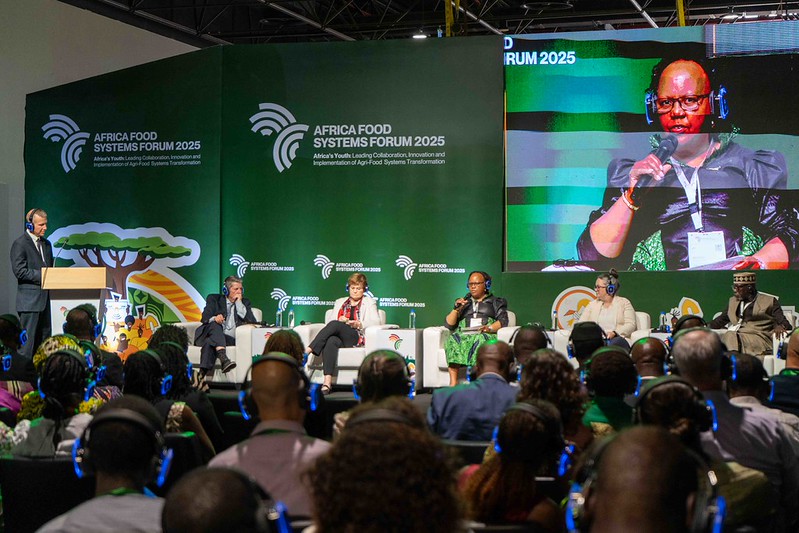
From Aug. 30–Sept. 6, 2025, NASDA members and staff traveled to Senegal to participate in the African Food Systems Forum and engage in an outbound trade mission focused on agricultural trade, food security and market development across Africa. The delegation included Arkansas Secretary of Agriculture Wes Ward, Vermont Secretary of Agriculture Anson Tebbetts and U.S. Dairy Export Council President and CEO Krysta Harden, alongside NASDA leadership and staff.
Supported by USDA’s Regional Agricultural Promotion Program, the mission was organized in close collaboration with USDA’s Foreign Agricultural Service in Dakar and the U.S. Embassy in Senegal. Senegal serves as a strategic gateway to West Africa and a growing hub for regional agricultural trade and investment, offering opportunities to expand U.S. exports and strengthen partnerships across the continent.
The mission centered on participation in the African Food Systems Forum, a leading convening of government officials, agribusiness leaders, researchers and development organizations from more than 100 countries. At the forum, NASDA hosted and participated in high-level discussions on poultry and livestock value chains, feed and dairy development, biotechnology and agricultural innovation. NASDA leadership also contributed to plenary sessions highlighting state-led collaboration, data-driven decision-making and producer engagement.
In addition to the forum, delegates met with government ministers and senior officials from Senegal, Morocco, Tanzania and Kenya to discuss shared priorities in food safety, biosafety regulation, livestock productivity and agricultural research. Discussions emphasized the importance of science-based policy, capacity building and regulatory transparency in supporting market access and trade growth.
The delegation also engaged with agribusiness leaders, trade associations and research institutions involved in feed milling, dairy production, food processing and cold chain logistics. Site visits and bilateral meetings highlighted opportunities for U.S. exports of feed ingredients, dairy products, red meat and branded grocery items, as well as the growing role of infrastructure investment and financing in expanding agricultural trade across West Africa.
Throughout the mission, participants emphasized the value of direct engagement with African partners and the importance of sustained collaboration. Discussions reinforced the role of U.S. states as trusted partners in agricultural development and trade promotion, complementing federal efforts and private-sector investment.
The mission strengthened relationships across government, industry and research institutions and underscored NASDA’s role in advancing U.S. agricultural engagement in Africa. By participating in the African Food Systems Forum and facilitating targeted meetings in Senegal, NASDA continues to support resilient food systems, expand trade opportunities and promote mutually beneficial agricultural partnerships across the continent.
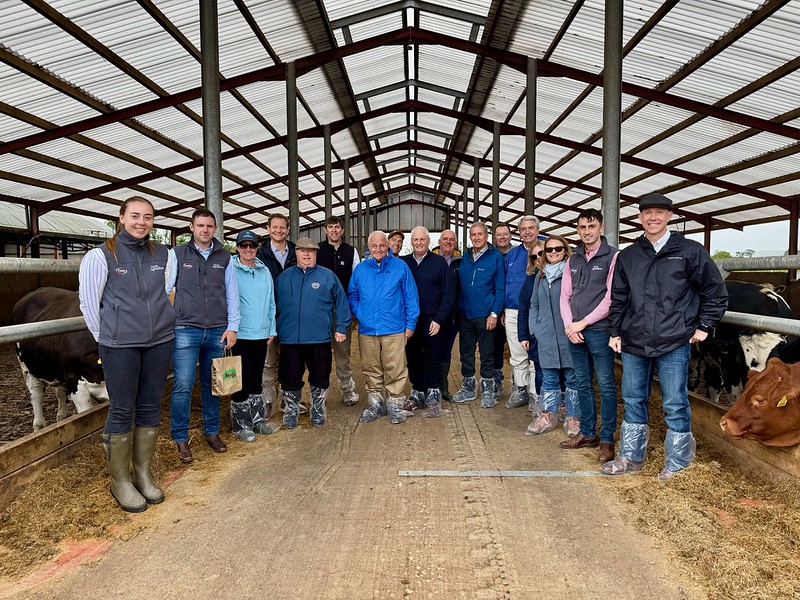 From August 2–9, 2025, NASDA members from the Arkansas Department of Agriculture, Connecticut Department of Agriculture, Louisiana Department of Agriculture and Forestry, Maine Department of Agriculture, Conservation and Forestry, South Carolina Department of Agriculture and Washington State Department of Agriculture joined NASDA staff for an outbound trade mission to the United Kingdom and Ireland. The delegation included NASDA CEO Ted McKinney, COO Martha Van Dale, Director of International Trade Marketing & Outreach Derrek Miller and Associate Director of International Trade Programs Malikha Daniels. Supported by USDA’s Regional Agricultural Promotion Program, the mission was organized in close collaboration with USDA Foreign Agricultural Service London, the British Embassy Washington and the Embassy of Ireland in Washington, D.C.
The UK and Ireland remain critical partners for U.S. agriculture, with shared interests in sustainable farming, science-based regulation and resilient food systems. The mission focused on expanding two-way trade, addressing market access challenges and identifying opportunities for joint research and innovation. Discussions highlighted high-priority areas such as U.S. oyster market access, gene-editing technologies and poultry vaccination policy, alongside Ireland’s leadership in climate-smart agriculture and sustainability branding.
Delegates engaged with government leaders, industry representatives, and research institutions throughout the mission. Key meetings included the Department of Agriculture, Environment and Rural Affairs, Teagasc Food Research Centre, Bord Bia, the U.S. Embassy London and the UK’s National Farmers Union. Visits to Hillsborough Castle, the Irish National Stud, Pirbright Institute, Foyle Food Group and G’s Fresh underscored opportunities in animal health, livestock genetics and farm-level sustainability practices.
The mission established clear pathways for future collaboration, including technical exchanges with Pirbright and Teagasc, policy dialogue on inheritance tax and succession planning and opportunities for U.S. states to host inbound delegations from the UK and Ireland. By deepening relationships across government, industry and research, NASDA is helping ensure long-term resilience, innovation and mutually beneficial trade growth across the transatlantic partnership.
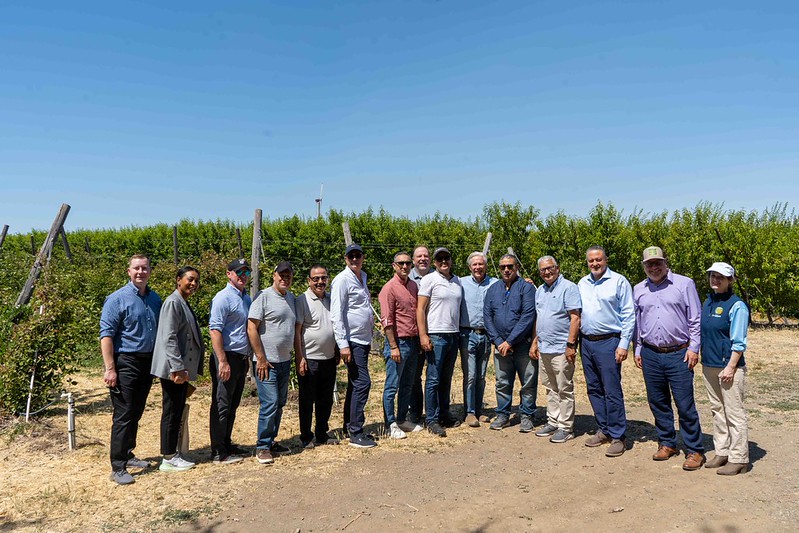
From June 22–28, 2025, NASDA welcomed an inbound delegation from Morocco to California for a trade mission focused on tree nuts, agricultural research, biotechnology and sustainable production systems. The delegation included senior officials from Moroccan government agencies, agricultural associations and the private sector, alongside NASDA staff and state agriculture partners.
Supported by USDA programs, the mission aimed to strengthen agricultural collaboration between the United States and Morocco and to deepen understanding of California’s regulatory frameworks, research capacity and export-oriented production systems. Discussions centered on tree nut production and trade, science-based regulation, climate-smart agriculture and the role of innovation in addressing challenges such as water scarcity and drought.
Throughout the week, delegates engaged with government leaders, researchers and industry representatives across Sacramento, Modesto and the San Francisco Bay Area. Meetings with the California Department of Food and Agriculture provided an overview of the state’s agricultural priorities, regulatory systems and climate resilience strategies. Delegates also participated in briefings on California’s leading export commodities, water management policies and emerging technologies, including artificial intelligence applications in agriculture.
Site visits highlighted the full tree nut value chain, from production to export. Delegates toured orchards and processing facilities to examine organic and conventional production methods, soil health practices and sustainable irrigation techniques. Discussions with industry leaders focused on almond and walnut production, processing standards and trade regulations, as well as the use of advanced technologies to support quality control and operational efficiency.
At the University of California, Davis, the delegation explored agricultural research and extension programs, with briefings on drought and irrigation management, crop genetics and innovation in tree nut production and processing. The visit underscored the close connection between research institutions and producers in advancing science-based agricultural practices.
The mission concluded with meetings at the Port of Oakland, where delegates examined the regulatory and operational aspects of agricultural trade. Briefings with port officials, shipping companies and a USDA inspector provided insight into export logistics, inspection processes and the movement of agricultural goods through U.S. ports.
The mission reinforced the value of continued U.S.–Morocco collaboration on agricultural trade, research and sustainability. Delegates left with a stronger understanding of U.S. production systems and regulatory requirements, while NASDA and its partners identified opportunities for future technical exchanges, follow-up engagement and additional inbound and outbound missions to support mutually beneficial trade growth.
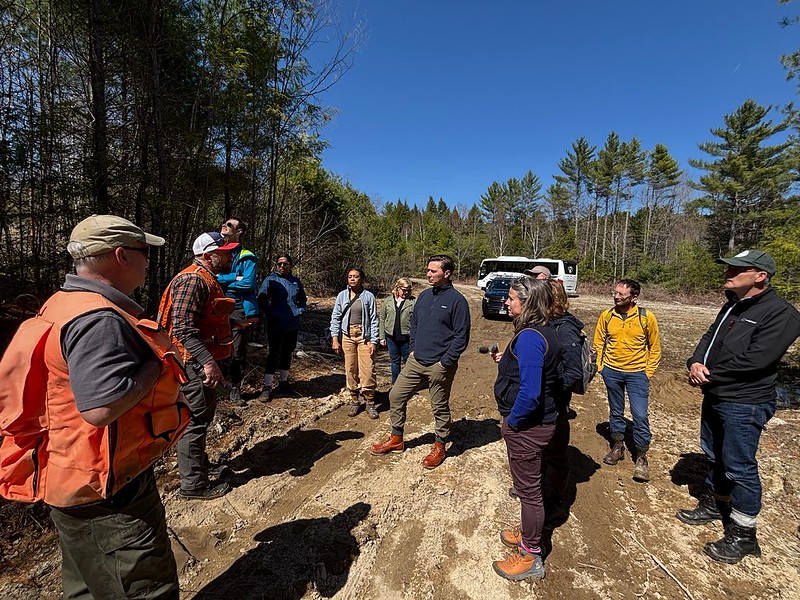
From April 27–May 2, 2025, NASDA welcomed an inbound delegation from the United Kingdom for a trade mission focused on forestry management, biomass sustainability and renewable energy supply chains. The delegation included senior officials from the U.K. Department for Environment, Food and Rural Affairs, the Department for Energy Security and Net Zero, forestry research institutions and the British Embassy, alongside NASDA leadership and state agriculture officials from Maine, Louisiana and Arkansas.
Supported by USDA programs, the mission aimed to deepen U.S.–U.K. collaboration on sustainable forestry and to strengthen understanding of the environmental and economic role of U.S. biomass markets. With wood pellet exports playing a critical role in transatlantic renewable energy supply chains, discussions focused on forest health, sustainability metrics, climate resilience and the integration of forestry and energy policy.
The mission began in Maine, where delegates engaged with state forestry officials, industry leaders and private landowners. Site visits and roundtable discussions highlighted working forests as a tool for climate mitigation, invasive species management and rural economic development. Delegates toured sawmills, harvest sites and forestlands to examine sustainable forest management practices, small woodland ownership models and the regulatory frameworks governing forestry operations.
In Louisiana, the delegation explored the role of biomass markets in supporting forest health and rural communities. Visits to pellet production facilities and meetings with local stakeholders provided insight into biomass supply chains, community engagement and environmental stewardship. Delegates also examined reforestation efforts and land restoration projects, reinforcing the connection between forest management and ecosystem resilience.
The mission concluded in Arkansas, where delegates engaged with researchers, state officials and industry representatives on forest health, innovation and applied science. Briefings at the University of Arkansas at Monticello highlighted research on forest pathology, remote sensing, wildfire risk management and waterfowl habitat, underscoring the role of science-based approaches in sustaining forest ecosystems. A final roundtable discussion brought together community leaders, researchers and industry partners to examine the economic and environmental impacts of the forestry sector.
Throughout the mission, delegates emphasized the value of seeing U.S. forestry systems firsthand and engaging directly with landowners, researchers and regulators. The visit strengthened confidence in the sustainability of U.S. forestry and biomass supply chains and reinforced the importance of continued collaboration between the United States and the United Kingdom.
By facilitating direct engagement across government, academia and industry, NASDA continues to advance science-based dialogue and practical cooperation on forestry and renewable energy. The April mission established a strong foundation for continued technical exchanges, follow-up engagement and future trade missions supporting resilient forests and sustainable trade.
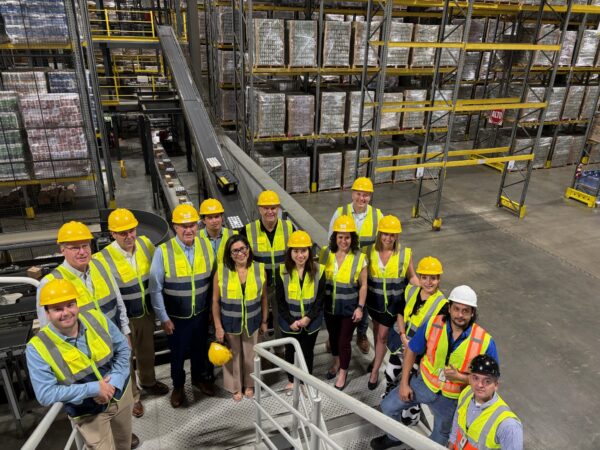 In April, NASDA members from the Arizona Department of Agriculture, Mississippi Department of Agriculture and Commerce, Montana Department of Agriculture, Ohio Department of Agriculture and South Carolina Department of Agriculture joined NASDA staff members Megan Weeks, RJ Karney and Chayada Vinyard for an impactful outbound trade mission to Panama. The delegation, supported by USDA FAS Panama, also included representatives from U.S. Livestock Genetics Export (USLGE), the U.S. Meat Export Federation (USMEF), Sabor USA and other key U.S. agricultural partners.
Panama is experiencing strong and growing demand for U.S. food and agricultural products. With a population of 4.5 million and a size comparable to South Carolina, the country offers valuable opportunities for U.S. small businesses focused on high-quality, niche products.
Throughout the mission, delegates met with government officials, industry leaders and top buyers across Panama’s agricultural sector. The trip centered on building relationships, expanding market access and identifying ways to reduce trade barriers. It created new opportunities for U.S. products such as Montana lentils, Arizona dates and Mississippi cottonseed for cattle feed. It also laid the groundwork for collaboration between the Ministry of Agricultural Development (MIDA) and USLGE to strengthen livestock genetics and improve herd quality.
A key outcome of the mission—made possible through the efforts of FAS Panama and the U.S. Department of Commerce—is Panama’s commitment to send nearly 70 buyers to NASDA’s A Taste of the States pavilion at the National Restaurant Association Show in Chicago this May. This immediate result demonstrates the value of trade missions in creating global partnerships and delivering measurable benefits for U.S. producers.
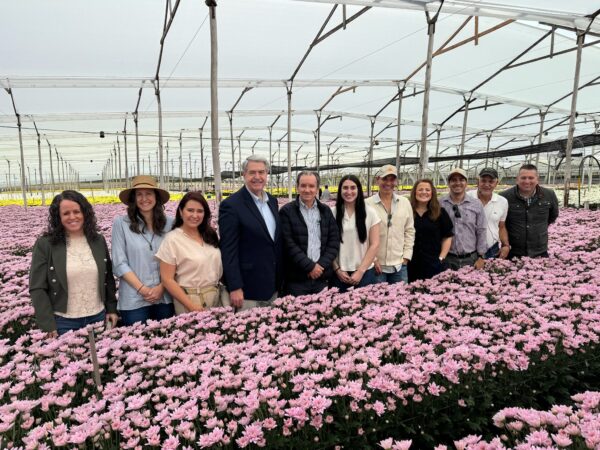
From February 2–7, 2025, NASDA organized a high-impact outbound trade mission to Colombia, supported by USDA’s Regional Agricultural Promotion Program. This strategic visit laid the groundwork for a second, more extensive mission planned for October 2025. The delegation included NASDA CEO Ted McKinney, International Trade Programs Senior Director Megan Weeks, Public Policy Director Becky Garrison Warfel and Executive Administrator Madalyn Willis. In partnership with USDA Foreign Agricultural Service Bogotá and AmCham Medellín, the team engaged in a full week of government meetings, retail tours and roundtables with key Colombian industry leaders.
The mission underscored growing demand for U.S. agricultural products—particularly fruit purees, animal feed, biscuits, coffee, dairy and cocoa. Conversations with companies such as Agrofrut, Solla, Grupo Bios, Colcafé, Luker Chocolate and others revealed strong interest in U.S. supply chain partnerships, sustainable production methods and capacity-building in food safety and agricultural infrastructure. However, regulatory barriers—including nutritional labeling requirements and tariffs—continue to challenge access to the Colombian market, especially for dairy, fresh produce and processed goods.
The delegation also held a productive meeting with Colombian Farmers’ Society President Jorge Bedoya—the country’s leading agricultural trade association. The conversation highlighted strong alignment and opened the door for future collaboration, particularly around capacity-building efforts.
U.S. Embassy officials in Bogotá emphasized the importance of long-term collaboration and rural security under the current administration. While acknowledging a complex political landscape, embassy staff encouraged continued NASDA engagement through targeted technical assistance, training programs and partnerships that support Colombia’s food security and agricultural productivity goals.
 NASDA, utilizing funds from the Regional Agricultural Promotion Program, organized a trade mission to India Jan. 3-10, 2025. Participating members included NASDA President Secretary Wes Ward (Arkansas), Commissioner Bryan Hurlburt (Connecticut), Secretary Hunter Roberts (South Dakota), Acting Director Zachary Coccoli (Montana), Division Director of Marketing and Development Jason New (New Mexico) and special guest Plant Based Products Council Executive Director James Glueck. The group was accompanied by NASDA staff Martha Dale, Ellen Roth and Shana Walklet, and worked in collaboration with USDA Foreign Agricultural Service New Delhi. The delegation spent the week engaging in fruitful industry and government meetings and touring retail facilities, giving them firsthand insight on opportunities for U.S. agriculture in the Indian market.
The trip was very successful in strengthening trade relationships and addressing food security challenges. Key outcomes included building ties with the Food Safety and Standards Authority of India, exploring opportunities for U.S. high-value product import, and discussing collaborative initiatives with Indian government and industry leaders. The trip highlighted India’s growing food demand, existing bureaucratic hurdles and the need for partnerships to prepare for potential shortages, laying the groundwork for future collaboration and market expansion.
The delegation was able to meet with industry leaders from Mega Grains, California Agri Nuts Corporation, KBB Nuts Pvt Ltd, Suresh Kumar & Co., McDonald Pelz, the Louis Dreyfus Company, Agrocorp, Epicure Frozen Foods and Beverages, Foodstories, Reliance Smart, and Dev Bhumi Cold Chain Pvt Ltd. Industry participants expressed strong interest in reliable sourcing and collaboration on imports, with opportunities to process U.S. goods locally to create jobs and reduce costs. Key topics included dairy policy sensitivities and the growing interest in high-value U.S. products and pulses, with an emphasis on building long-term partnerships.
Meetings with government bodies included productive discussions with the Food Safety and Standards Authority of India on food safety regulations and potential knowledge-sharing initiatives. A separate meeting with the Ministry of Agriculture involved knowledge exchanges, while the Indian Council of Agricultural Research presented their research and emphasized collaboration opportunities. These engagements reinforced the need for strategic partnerships and highlighted the importance of optics in navigating India’s bureaucratic landscape.
2024 NASDA Trade Missions
 NASDA’s Emerging Markets Program trade mission to the Philippines took place Nov. 1-9,2024. Secretary Jeff Witte (New Mexico), Director Doug Miyamoto (Wyoming), Director Derek Sandison (Washington State), Secretary Mike Beam (Kansas), Secretary Kevin Atticks (Maryland), NASDA CEO Ted McKinney, USA Poultry & Egg Export Council CEO Greg Tyler and Global Cold Chain Alliance Vice President of International Projects Amanda Brondy participated in government and industry meetings in Manila. NASDA is incredibly grateful to Mike Ward and the USDA Foreign Agricultural Service office in Manila for all their guidance before, during and after the trade mission.
The NASDA delegation gained deeper insight on the Philippine government’s desire to increase dairy production and grow poultry consumption, food security, cold storage capacity building, wheat milling education, capacity building and training on preparing for and managing animal disease outbreaks and exchange partnerships with land grant universities. NASDA staff is currently planning for 1-2 inbound Filipino delegations to visit the U.S. in 2025.
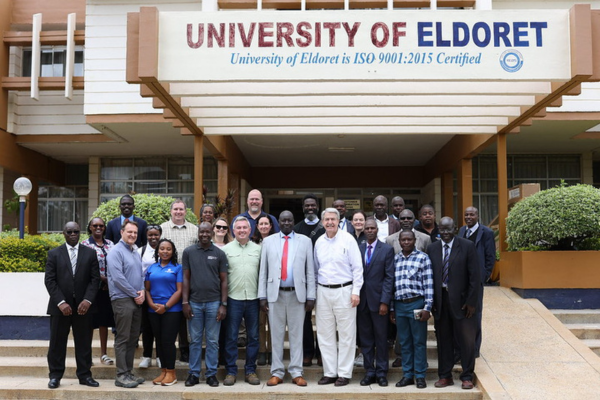
From May 4–10, 2024, NASDA members and staff traveled to Kenya for an outbound trade mission focused on strengthening agricultural partnerships, advancing biotechnology engagement and identifying opportunities to expand U.S. agricultural exports in an emerging market. The delegation included state agriculture leaders from Kansas, Illinois, Tennessee, Texas, Wyoming and South Carolina, alongside NASDA leadership and a private-sector representative from the wine and beverage industry.
Supported by USDA’s Emerging Markets Program, the mission built on momentum from NASDA’s previous engagement in Kenya in late 2023 and sought to deepen relationships with government officials, producers, researchers and agribusiness leaders. Kenya was selected for its strategic role as a regional hub in East Africa, its growing consumer market and its increasing demand for agricultural inputs, technology and expertise.
Throughout the mission, delegates met with Kenyan government agencies, regional organizations and industry stakeholders to discuss regulatory frameworks, market access and shared priorities in agricultural development. Meetings with the National Biosafety Authority and other regulatory bodies focused on biotechnology policy, public awareness and the role of science-based regulation in supporting food security and productivity. Discussions also addressed Kenya’s decentralized governance structure and the importance of coordination across national and county levels.
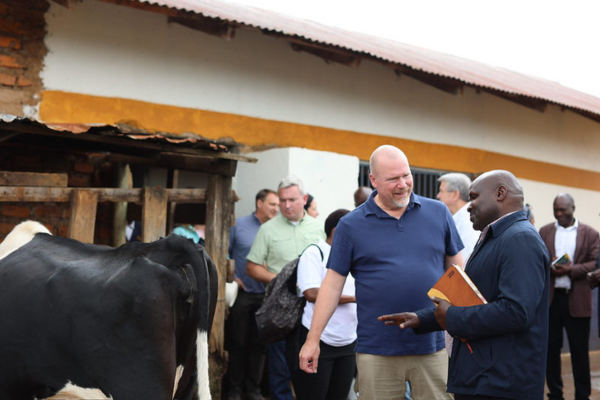
The delegation participated in field visits highlighting livestock production, dairy processing, grain farming and food manufacturing. Visits to farms and agribusinesses demonstrated the potential for U.S. livestock genetics, animal feed, seed technologies and agronomic practices to support productivity and resilience. Delegates also engaged with organizations focused on extension services, sustainability and climate adaptation, reinforcing the importance of knowledge sharing and capacity building.
In addition, the mission included targeted discussions with Kenyan importers, bankers and distributors to explore opportunities for consumer-oriented products, grains and beverages. Conversations emphasized the need for improved infrastructure, financing mechanisms and regulatory clarity to support expanded trade and private-sector investment.
The mission identified clear opportunities for continued collaboration, including regulatory exchanges, education and outreach on biotechnology, and follow-up engagement through inbound trade missions. NASDA and its partners agreed to pursue a future reverse trade mission to the United States to further advance cooperation in livestock genetics, feed and seed innovation.
By convening state agriculture leaders and facilitating direct engagement with Kenyan partners, NASDA continues to support long-term market development and mutually beneficial trade. The May 2024 mission reinforced NASDA’s role as a trusted partner in emerging markets and laid the groundwork for sustained U.S.–Kenya agricultural collaboration.
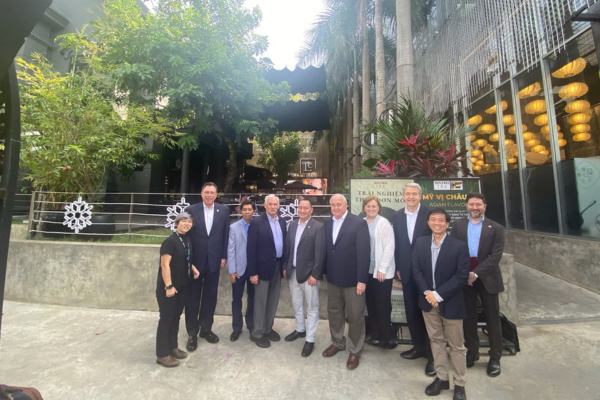
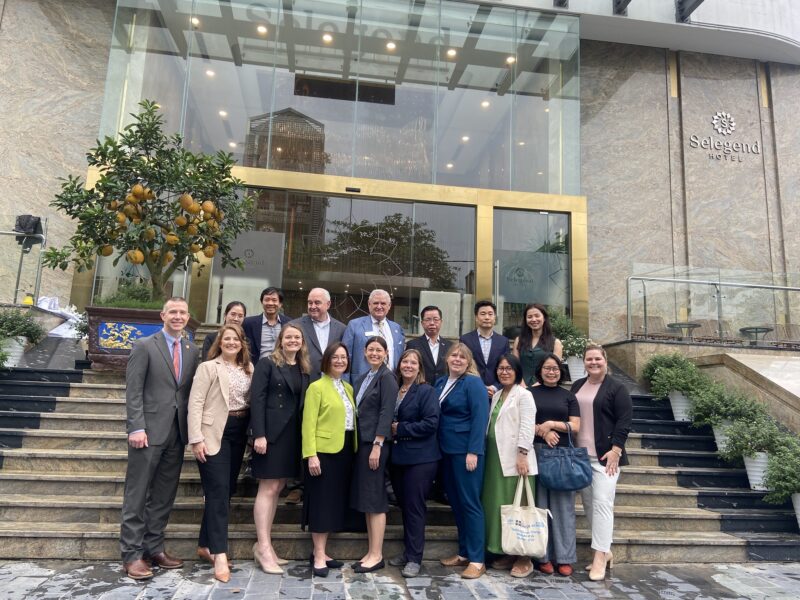 On April 8-12, 2024, NASDA organized a follow-up Emerging Markets Program trade mission to Vietnam after first visiting the market in January 2023. Arkansas Agriculture Secretary and NASDA Vice President Wes Ward, Alabama Agriculture Commissioner Rick Pate, Montana Agriculture Director Christy Clark, Nebraska Agriculture Director Sherry Vinton, Washington State Agriculture Director Derek Sandison and Global Cold Chain Alliance Vice President of International Projects Amanda Brondy led the delegation to further build upon relationships developed in 2023.
The trip focused on supply chains and agricultural research in northern Vietnam. Without significant improvements to its supply chain, Vietnam faces continued challenges with food quality, food waste and food safety.
To gain deeper insights into the market and the challenges faced, the group visited several retail outlets in Hanoi including WinMart, MegaMart and Big C along with the Long Bien night market. As Vietnamese consumers begin to transition away from traditional markets, relationships with growing retailers will pay dividends for U.S. producers for years to come.
The delegation also toured the port of Cai Lan and visited with several importers including T&P FreshFoods, Biovegi and Ace Foods. These importers play a pivotal role in developing a reliable cold chain in Vietnam and are eager to import more U.S. products. Reduction of current tariffs would increase this interest even further.
In recognition of the value of technology and knowledge transfer in building stronger trade relationships and providing U.S. producers with the best resources, the group also met with: a leading seed researcher and producer, Thai Binh Seed; the developer of an African Swine Fever vaccine, DABACO; and the National Agriculture Extension Center.
As an additional effort to build relationships with industry and government in Vietnam, NASDA hosted a reception in Hanoi and concluded the week with a meeting with the Ministry of Agriculture and Rural Development Department of International Cooperation. NASDA members offered support to Vietnam in a variety of areas including: supply chain partnerships; technology exchange and information transfer in areas such as seed, fertilizer, pesticides and machinery; natural resource conservation; and education partnerships with U.S. land-grant universities.
This mission follows NASDA’s initial visit to Vietnam in January 2023, where they established relationships and sought opportunities for collaboration and information exchange. A reciprocal visit by a Vietnamese delegation to the U.S. in October 2023 further built rapport and deepened knowledge of the U.S. and Vietnam markets and cultures for both the U.S. and Vietnam delegations. Over the previous 18 months, NASDA has seen significant strengthening in our relationship with both industry and government in Vietnam. NASDA is committed to continuing to grow these relationships as we work to build more diverse markets for U.S. producers around the world.
 NASDA utilized Market Access Program (MAP) funds from the USDA Foreign Agricultural Service to lead a trade mission to Cuba Feb. 19-21. Connecticut Agriculture Commissioner Bryan Hurlburt, Indiana Agriculture Director Don Lamb, Louisiana Agriculture Commissioner Mike Strain, Maine Agriculture Commissioner Amanda Beal, Minnesota Agriculture Commissioner Thom Petersen, Montana Agriculture Director Christy Clark, South Carolina Agriculture Commissioner Hugh Weathers, NASDA CEO Ted McKinney and FTA International President Ernesto Baron participated in government and private sector meetings in Havana.
The mission kicked off with presentations from the Cuban Ministry of Agriculture and Ministry of Foreign Affairs, covering agricultural policy in Cuba and the history of U.S.-Cuba trade and diplomatic relations over the last 20+ years. One of the most influential recent changes was the announcement in 2021 that the Cuban government would allow private enterprises to be legally recognized entities in the Cuban economy. This led to a tremendous emergence of the private sector. Since this change, approximately 10,000 small- and medium-sized enterprises have been established in the country. The delegation then met with the Ministry of Economy and Planning and five Cuban enterprises focused on agriculture and food production.
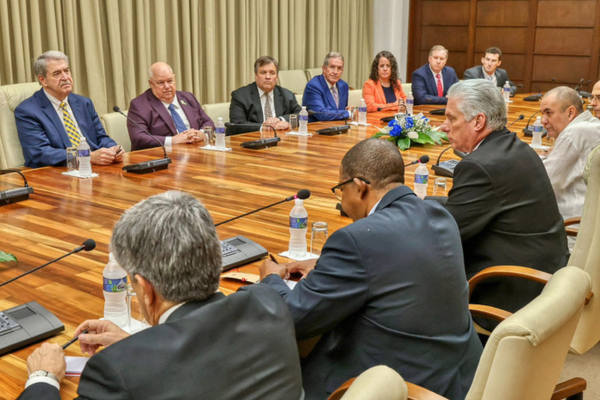
At the end of the first day, the NASDA delegation was fortunate to visit with the Cuban President Miguel Díaz-Canel and members of his cabinet. The president spoke on how relations with the U.S. have changed over the last three U.S. presidential administrations and the impact of U.S.-Cuba relations on their economy. He also elaborated on the struggles of the COVID-19 pandemic and the food insecurity challenges they face today. Although NASDA has no impact on governmental relations, the delegation emphasized its desire to build relationships and develop bilateral trade that supports the development of the private economy in Cuba and reduces food insecurity.
Site visits continued the next couple days, including to a ration center that explained how food is distributed, a logistics center, a national food processor and a farm cooperative facility. The delegation also met with U.S. Embassy staff in Havana to debrief the government meetings and gain perspective from the market. To conclude the mission, the NASDA delegation hosted a press conference where reporters from several media outlets asked about takeaways from the trade mission and the next steps forward.
NASDA kicked off 2024 with an Emerging Markets Program trade mission to Morocco Jan. 8-12. Illinois Department of Agriculture Director Jerry Costello II, Kansas Department of Agriculture Secretary Mike Beam, Massachusetts Department of Agriculture Commissioner Ashley Randle, South Carolina Department of Agriculture Commissioner Hugh Weathers, NASDA CEO Ted McKinney, and Almond Board of California Vice President of Global Technical & Regulatory Affairs Julie Adams participated in government and industry meetings in Rabat and Casablanca.
The mission began at the U.S. Embassy in Rabat with the delegation meeting with Ambassador Puneet Talwar, as well as representatives from the USDA Foreign Agricultural Service, U.S. Commercial Service, and the U.S. Department of State to gain an understanding of the market and relationship between the U.S. and Morocco. This provided valuable insight that helped NASDA members have deep discussions with importers, agricultural associations and producers throughout the week.
Another high-priority topic was the former “Green Morocco Plan,” now continued under the name of “Generation Green 2020-2030.” As Morocco deals with climate change in record temperatures and an ongoing five-year drought, the country has experienced increased food insecurity, inflation in food prices and reliance on imports. This new strategy hopes to address these challenges for the agricultural sector and the Moroccan consumer. It also develops incentives for junior professional and entrepreneurship development to expand the talent working to identify solutions.
The U.S.-Morocco Free Trade Agreement and the geographic proximity across the Atlantic Ocean make Morocco an accessible market for U.S. exporters. Throughout the mission, several meetings mentioned Morocco being the first state to publicly acknowledge the independence of the U.S. from Great Britain in 1777. Although there is heavy European influence in Moroccan culture and business processes, they are extremely interested in strengthening their business ties to the U.S. American agriculture must prioritize consistently building these relationships to demonstrate the quality and accessibility of U.S. products.
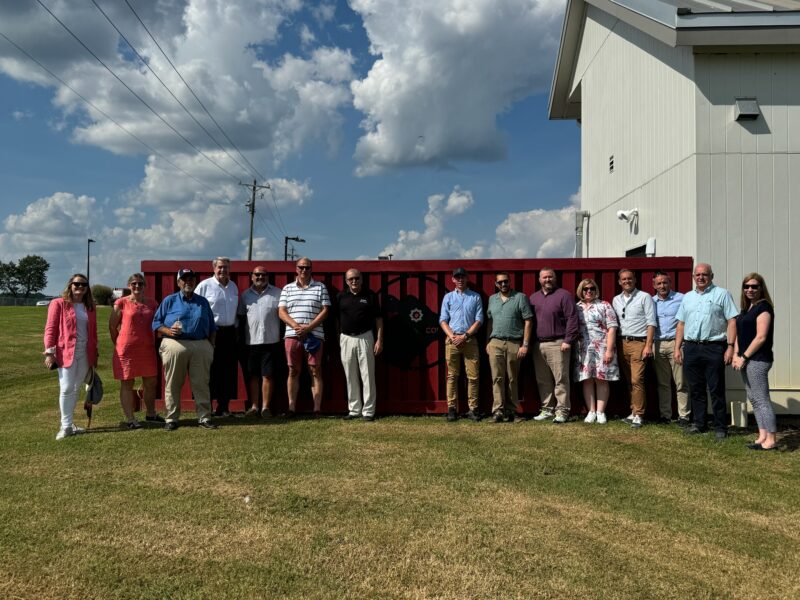 NASDA partnered with USDA Foreign Agricultural Service and British Embassy Washington to host an inbound Regional Agricultural Promotion Program trade mission of attendees from the UK in North Carolina to gain a deeper understanding of animal agriculture production, regulations and voluntary standards in the U.S. Attendees included veterinary officials, university faculty, representatives from meat processing companies and staff from both the Animal Plan Health Agency and the Department for Environment, Food and Rural Affairs. The group toured a poultry operation, attended a roundtable with NC Pork Council and learned more about the extension system at N.C. State. National Cattlemen’s Beef Association was a key partner in planning the mission. A highlight of the week was visiting the Steve Troxler Agricultural Sciences Center. NASDA continues to build on the relationships developed during the mission and looks forward to furthering those relationships to showcase the high level of standards in U.S. agriculture.
 NASDA hosted 17 delegates from Indonesia to participate in an inbound Emerging Markets Program trade mission to Madison, Wisconsin, Sept. 29 – Oct. 5, 2024. The delegation included dairy industry leaders, academics, USDA Foreign Agricultural Service Jakarta staff and U.S. Embassy of Indonesia staff. Co-ordinated with the Wisconsin Department of Agriculture, Trade and Consumer Protection and U.S. Dairy Export Council, the delegation spent the week touring dairy farms, cheese and milk processing facilities, retail stores and cranberry and dairy research centers, before wrapping up their trip by attending the World Dairy Expo.
The delegation was accompanied by Massachusetts Agriculture Commissioner Ashley Randle, New Mexico Agriculture Secretary Jeff Witte, Tennessee Agriculture Commissioner Charles Hatcher, Minnesota Agriculture Commissioner Thom Petersen and Wisconsin Agriculture Secretary Randy Romanski.
The trip was successful in establishing relationships between the Indonesian government, who recently announced a new initiative to bring milk to schools, and U.S. agricultural leaders. Learn more from the U.S. ambassador.
2023 NASDA Trade Missions
 NASDA members Commissioner Amanda Beal (Maine), Commissioner Ryan Quarles (Kentucky) and Secretary Randy Romanski (Wisconsin) along with Bayer Global Head Partnerships-Growers Engagement and AgriChain Activation Jennifer Crall and Chuck Penry and Associates President Charles Penry traveled to Kenya for the last trade mission of the year.
NASDA’s trip gave members the opportunity to see firsthand the opportunities in the country, and provided clear next steps on how U.S. industry, academia and government can collaborate. Following the trip, staff convened other groups working in Kenya. Meetings with U.S. cotton and grain industry have explored how Kenya’s interest in biotechnology can benefit growers; animal agriculture and livestock genetic groups have discussed ways to bolster resiliency and performance in Kenyan production; and NASDA has been joined by the Association of Public and Land-Grant Universities in exploring how critical extension services can be amplified in country to propel the adoption of new and innovative technologies.
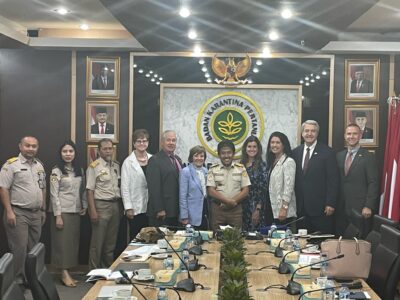 NASDA’s Emerging Markets Program trade mission to Indonesia took place August 4-11. NASDA President and Oklahoma Agriculture Secretary Blayne Arthur, Arkansas Agriculture Secretary Wes Ward, New Mexico Agriculture Secretary Jeff Witte, Massachusetts Agriculture Commissioner Ashley Randle, California Agriculture Secretary Karen Ross, NASDA CEO Ted McKinney and U.S. Dairy Export Council President & CEO Krysta Harden participated in government and industry meetings.
The delegation kicked off the mission in Jakarta by meeting with U.S. Ambassador Sung Kim. The meeting delved into critical agriculture topics including animal care standards, expediting dairy facility registration and the strong desire of Indonesians to do business with the U.S. the NASDA delegation and Indonesian leaders emphasized further relationship building is crucial to increasing trade and building trust between the countries and the importance of return trips to Indonesia, and reverse trade missions to the United States cannot be overemphasized. The greatest challenge facing the U.S. – Indonesia partnership is the Halal certification requirement. Effective October 2024, the U.S. dairy industry will need to re-certify over 120 dairy processors that currently export to Indonesia. Aside from dairy, there is great potential for soybeans, aquaculture, dried fruit and nuts and livestock (bovine) genetics.
NASDA continued its mission by hosting a reception with 80 importers, government officials, and in-country industry leaders. To conclude the mission, the delegation held meetings with industry representatives, fellow FAS cooperators in the market, and the Indonesian Food & Beverage Association (GAPMMI).
NASDA’s trade missions through the USDA Emerging Markets Program serve to not only open doors to new markets but also enhance diplomatic ties, foster economic growth and contribute to a stable and resilient supply chain. NASDA will continue to conduct trade missions like this one to work for the continued expansion of international trade and collaboration.
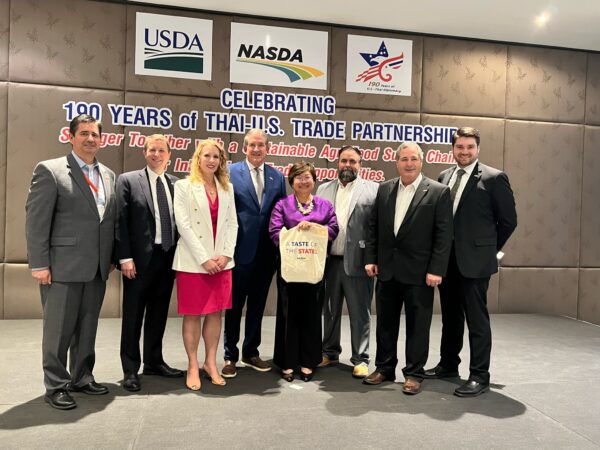 NASDA’s second Emerging Market Program mission was in March to Thailand. Commissioner Hugh Weathers, Commissioner Doug Goehring, Director Jerry Costello II and New Mexico Marketing Director Jason New joined National Grain and Feed Association President and CEO Mike Seyfert for a week in Bangkok with NASDA.
The group met with the Permanent Secretary for the Ministry of Agriculture and Cooperatives as well as leadership from the Office of Agricultural Economics and the Department of Agriculture. The challenges facing Thai agriculture were strikingly similar to those faced by agriculture in the U.S. There were specific requests for help in communicating with FDA and for technical support for Thai cooperatives to generate more value-added opportunities for Thai farmers. The group also toured the Laem Chabang Port Plant Quarantine Station where there was a request from the port leadership for support to improve training for their inspectors.
Over the course of the week, the group met with several Thai businesses in the food and agriculture sector including KCG Corp, Heritage Snacks & Food Co., Jagota Brothers Trading Co., the ASEAN Business Council, and C.P. Group, the largest feed company in the world.
NASDA also hosted a reception at VIV Asia, Asia’s leading international trade show for animal production and processing. The reception included Thai government leaders, Thai importers, U.S. cooperators, and exhibitors from the show. During the reception, Mike Seyfert provided an overview of improvements the U.S. has made and continues to make in the supply chain. As both an importer of U.S. goods and a large exporter to the U.S., delays at ports in the U.S. have caused issues for Thai businesses.
Thanks in large part to the support of the U.S. Department of Agriculture Foreign Ag Service post in Bangkok, the mission was a success in building relationships and positioning the US to be Thailand’s preferred trade partner. The week ended with lunch with the U.S. Ambassador to Thailand, Robert F. Godec, who voiced a commitment to expanding opportunities for US agricultural products in the region.
NASDA staff will be working closely to complete additional surveys in the country to inform our next steps. These trips are just the first step in building relationships to grow market opportunities for our producers around the world.
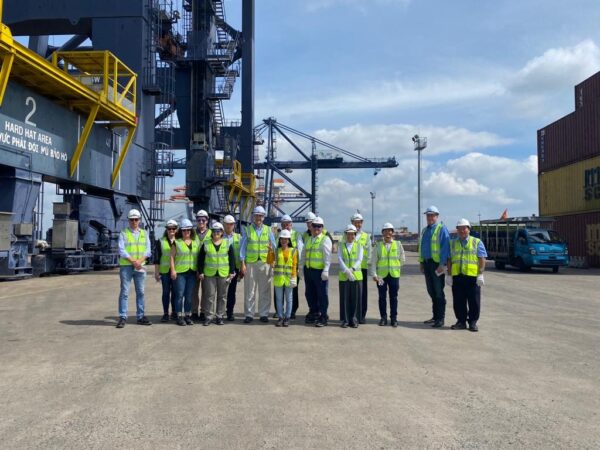 NASDA’s first Emerging Markets Program trade mission took place in Vietnam on January 9-13, 2023. NASDA President and Wyoming Department of Agriculture Director Doug Miyamoto, Washington State Department of Agriculture Director Derek Sandison, Delaware Secretary of Agriculture Michael Scuse, Texas Department of Agriculture Assistant Commissioner Dan Hunter, NASDA CEO Ted McKinney, and American Feed Industry Association President & CEO Constance Cullman participated in government and industry meetings in both Hanoi and Ho Chi Minh City.
The delegation kicked off the mission in Hanoi by meeting with the Vietnamese Ministry of Agriculture and Rural Development, including Vice Minister Phùng Đức Tiến. The meeting covered topics such as the progression of the Vietnamese economy and market access for agricultural products such as animal feed and grapefruit. NASDA emphasized the importance of bilateral trade relations and its support for developing the Vietnamese economy. Before leaving Hanoi, NASDA hosted a reception that included attendees from several Vietnamese businesses with an interest in U.S. agricultural products and government officials. The reception gave NASDA members the opportunity to connect with potential customers of products produced in their respective states.
NASDA continued the mission in Ho Chi Minh City by hosting a luncheon with over 25 Vietnamese business representatives focused on cotton, dairy, grains, beef, tree nuts, lumber, and fresh fruit. Trade delegates also met with Central Retail Vietnam, the Handicraft and Wood Industry Association, and the U.S. Grains Council team focused on Southeast Asia. Each of these visits was valuable for better understanding the growth of the market, the political dynamics of the region, and non-tariff barriers impacting market access for U.S. agriculture.
It is critical that we continue to show up in these markets and that the outreach does not end at the conclusion of the mission. NASDA and the participating trade delegates will build upon connections made and seek answers for potential trade barriers that were identified.
Emerging Markets Program
Learn more about NASDA’s Emerging Markets Program trade missions from NASDA Senior Director of International Trade Programs Megan Weeks.
In 2022, NASDA was awarded $925,000 through the USDA FAS Emerging Markets Program. Through this program, NASDA helps organizations promote exports of U.S. agricultural products to developing countries with strong growth potential.
Listen In: NASDA’s International Trade Programs and Partnerships in Action

Podcast feature: Listen to Episode 84 of the Almond Journey Podcast.
This Almond Journey Podcast episode highlights NASDA’s Morocco Inbound RAPP Trade Mission to California and the collaboration between FAS Rabat, WUSATA, the Almond Board of California and state partners from New Mexico and Kansas to grow U.S. agricultural trade.